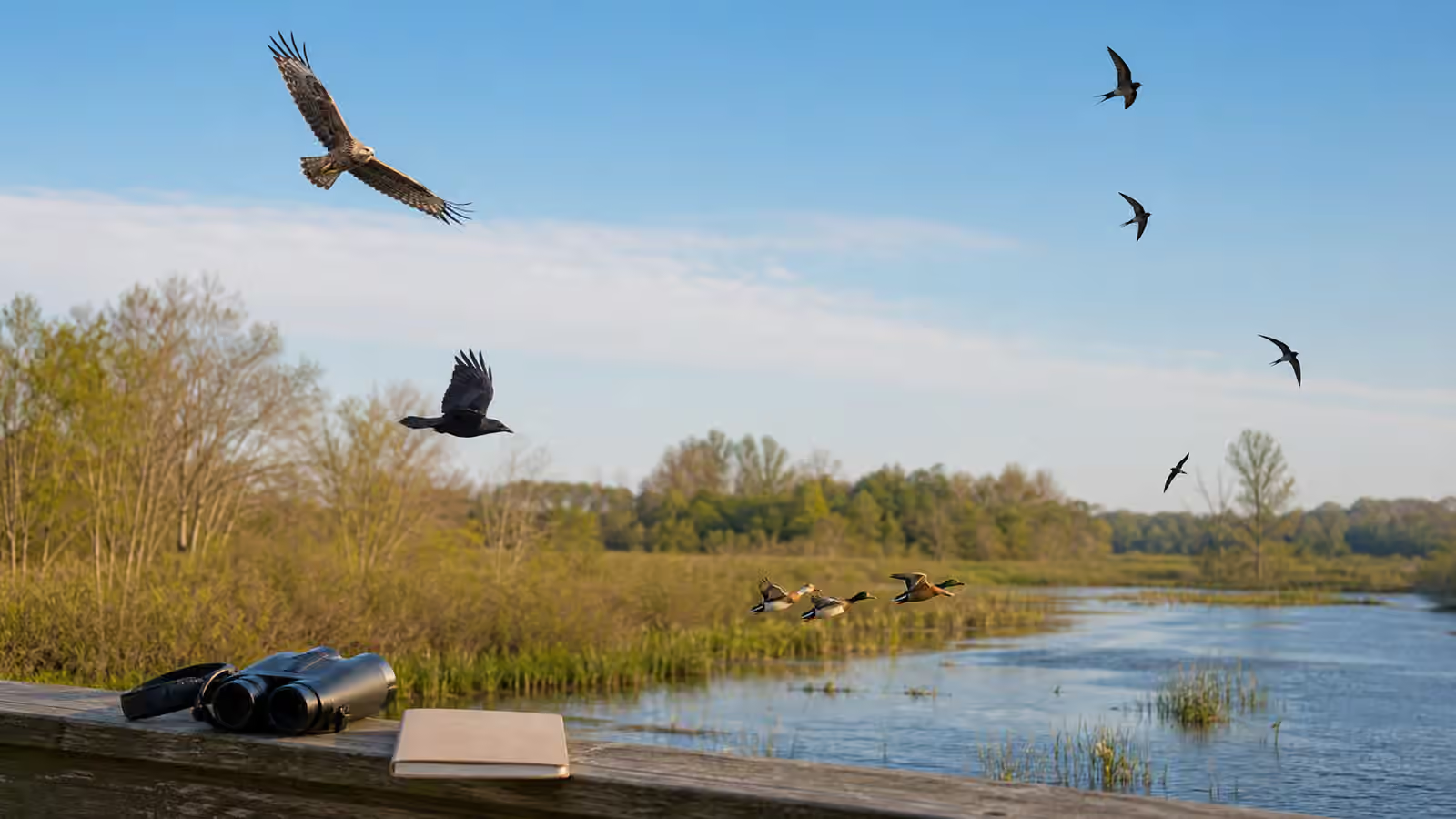
Birds in flight can feel like they are leaving before the lesson begins. A shape crosses the road, a flock flashes over water, a raptor circles high enough to lose color, or a small bird bounds from one hedge to another and disappears. Beginners often lower their binoculars too soon because the bird is moving away. That is a missed chance. Flight can be one of the clearest field marks if you learn to describe motion before demanding a name.
This guide builds on Silhouette Birding , Raptor Watching for Beginners , and How to Identify Birds Without Guessing . Color may vanish in sky, distance, rain, or glare, but wing shape and rhythm often remain. You may not identify every flying bird to species. You can still learn whether it moved like a duck, crow, swallow, heron, woodpecker, raptor, finch, shorebird, or something else entirely.
Watch the Whole Bird First
The first question is not “what color was it?” The first question is “how was it built for the air?” Look at the overall shape. Are the wings broad, long, narrow, pointed, rounded, bowed, stiff, or flexible? Is the tail long, short, forked, wedge-shaped, fanned, or barely visible? Does the head project strongly, does the neck stretch out, or does the body look compact? Is the bird front-heavy, tail-heavy, or balanced?
A heron may fly with broad wings, neck folded, and legs trailing. A goose may stretch its neck forward and keep a steady line. A duck may look compact with fast wingbeats over water. A crow may move with rowing flaps and a steady shape. A swallow may cut and turn through air with flexible speed. These are not exact identifications, but they place the bird in a better question.
Reading Bird Behavior for Beginners applies to flight because flight is behavior. Birds are not only crossing your view. They are commuting, hunting, escaping, displaying, migrating, feeding, returning to cover, following a shoreline, or joining a flock. The purpose often shapes the motion.
Rhythm Is a Field Mark
Wingbeat rhythm can survive poor light better than color. Some birds flap continuously. Some flap and glide. Some flap rapidly in bursts, then close the wings and bound. Some soar with little effort. Some hover. Some make deep, slow wingbeats that show power. Others make shallow, nervous wingbeats that keep them low and fast.
Watch for repetition. A woodpecker-like bird may show a bounding flight with strong flaps followed by a dipping glide. Many finch-like birds also bound, but with smaller bodies and different flock behavior. A gull may flap and glide with a different weight from a tern, which may look sharper and more buoyant. A raptor may circle, hold wings in a particular shape, or glide along a ridge. The exact species depends on your region, but the rhythm gives you a family-level starting point.
Birding by Ear teaches rhythm in sound. Flight has rhythm too. If you can remember a song as “two notes, pause, trill,” you can remember a bird as “three quick flaps, short glide, dip.” Plain language is enough. You do not need technical vocabulary to write a useful flight note.
Takeoff and Landing Explain the Bird
The moment a bird leaves a perch or lands can be more revealing than the middle of the flight. A duck running across water before lifting tells a different story from a small songbird popping straight from a shrub. A heron pushing up slowly from reeds looks different from a flock of shorebirds exploding from a mudflat. A raptor dropping from a snag may use gravity and a few heavy wingbeats before leveling out. A flycatcher may sally from a perch, catch prey, and return to almost the same place.
If you can, watch the whole sequence. Where did the bird start? How much effort did takeoff require? Did it climb, drop, skim, circle, or go straight? Where did it land? Did it choose open water, a reed edge, a trunk, a fence wire, a roofline, a sandbar, or a high branch? These details connect flight to habitat. Where and When to Go Birding becomes more useful when you treat flight paths as evidence of how birds use a place.
Landing also shows structure. Legs may extend, wings may cup, tail may fan, body may tilt, or the bird may fold into cover. A perched view after landing can confirm what the flight suggested. If the bird disappears, the landing place still matters. “Small bird bounded from roadside weed patch into low hedge” is a better memory than “small bird flew away.”
Flocks Have Their Own Motion
A flock is not just many birds at once. It has shape, spacing, speed, and reaction. Ducks may fly in lines or compact groups with fast wingbeats. Geese may form loose lines or angled formations. Shorebirds may wheel tightly, turning from dark to pale as the flock banks. Starlings, blackbirds, pigeons, gulls, swallows, and finches all create different impressions when moving together. You can learn a great deal before seeing a single color mark.
Start with spacing. Are birds close together or spread out? Do they turn as one body or as loose individuals? Are they low over water, high in the sky, skimming a field, following a tree line, or pouring into a roost? Do they call in flight? Does the flock rise because of a predator, a person, a dog, a tide change, or a sudden gust?
Mixed Flocks Birding is about birds moving through habitat together at close range, but the same mental habit works in the sky. Find the flock’s structure before naming every bird. If one bird is larger, slower, or shaped differently, that contrast may be the clue that lets you study it.
Match Flight to Habitat
Flight style is never separate from place. A bird skimming low over a pond might be feeding over insects. A bird circling high over a ridge may be using lift. A bird flying straight along a beach may be commuting between feeding and resting areas. A bird moving from one backyard tree to another may be following cover. A bird crossing open country low and fast may be avoiding exposure.
Swallows, Swifts, and Martins shows how aerial birds turn feeding into visible motion. Ducks and Waterfowl for Beginners gives another pattern, where water, flocking, and fast wingbeats work together. Herons, Egrets, and Wading Birds adds the long-legged, slow-winged lesson. Reading across these groups helps you build a mental library of motion.
Weather changes that library. Wind can make a bird glide more, struggle, drift sideways, or choose a lower route. Rain can push birds into direct flight between cover. Heat shimmer can make distant wingbeats hard to read. Weather Window Birding helps you ask whether the air itself is changing what you see.
Use Binoculars Without Losing the Shape
Binoculars can help with flight, but they can also make beginners lose the bird. If a bird is already moving fast, watch it with your eyes first. Learn its direction and rhythm. Then raise binoculars smoothly to the place the bird is going, not the place it was. If you miss, lower the binoculars, reacquire the bird with your eyes, and try again.
Do not chase the image in panic. A flying bird seen badly through binoculars may teach less than the same bird watched clearly with the naked eye. Wide context matters. You need to know whether it came from water, crossed a field, joined a flock, or landed in a tree. A close shaky view of feathers is not automatically better than a steady view of motion.
Binoculars and Gear is worth reading because fit and handling affect flight views. A binocular that is hard to raise, narrow in field of view, or uncomfortable to hold can make moving birds much harder. Technique matters as much as equipment.
Write Motion in Ordinary Words
Good flight notes sound like verbs. Soaring, circling, flapping steadily, bounding, hovering, gliding, skimming, banking, diving, rowing, fluttering, exploding from cover, dropping into reeds. Add shape and place. “Medium bird with broad rounded wings, slow deep flaps, crossed marsh and landed in dead tree.” “Small flock of compact birds with fast wingbeats low over reservoir, turned together twice.” “Long-winged bird hovered over surf, plunged, then rose and shook water off.”
Those notes are useful even when they stop short of species. Birding Checklists and Local Records works best when your record carries the evidence you actually had. A flight-only observation can be strong if the shape, behavior, and habitat agree. It can also be too thin, and there is no shame in leaving it as an unidentified bird.
The more you practice, the more familiar flight becomes. Common birds are the best teachers: crows over streets, gulls over parking lots, ducks over ponds, herons leaving a wetland, swallows above a field, woodpeckers crossing a trail, sparrows dropping into hedge cover. Watch them when you already know what they are. Later, when an unfamiliar bird moves through the same air in a different way, you will notice the difference before it disappears.