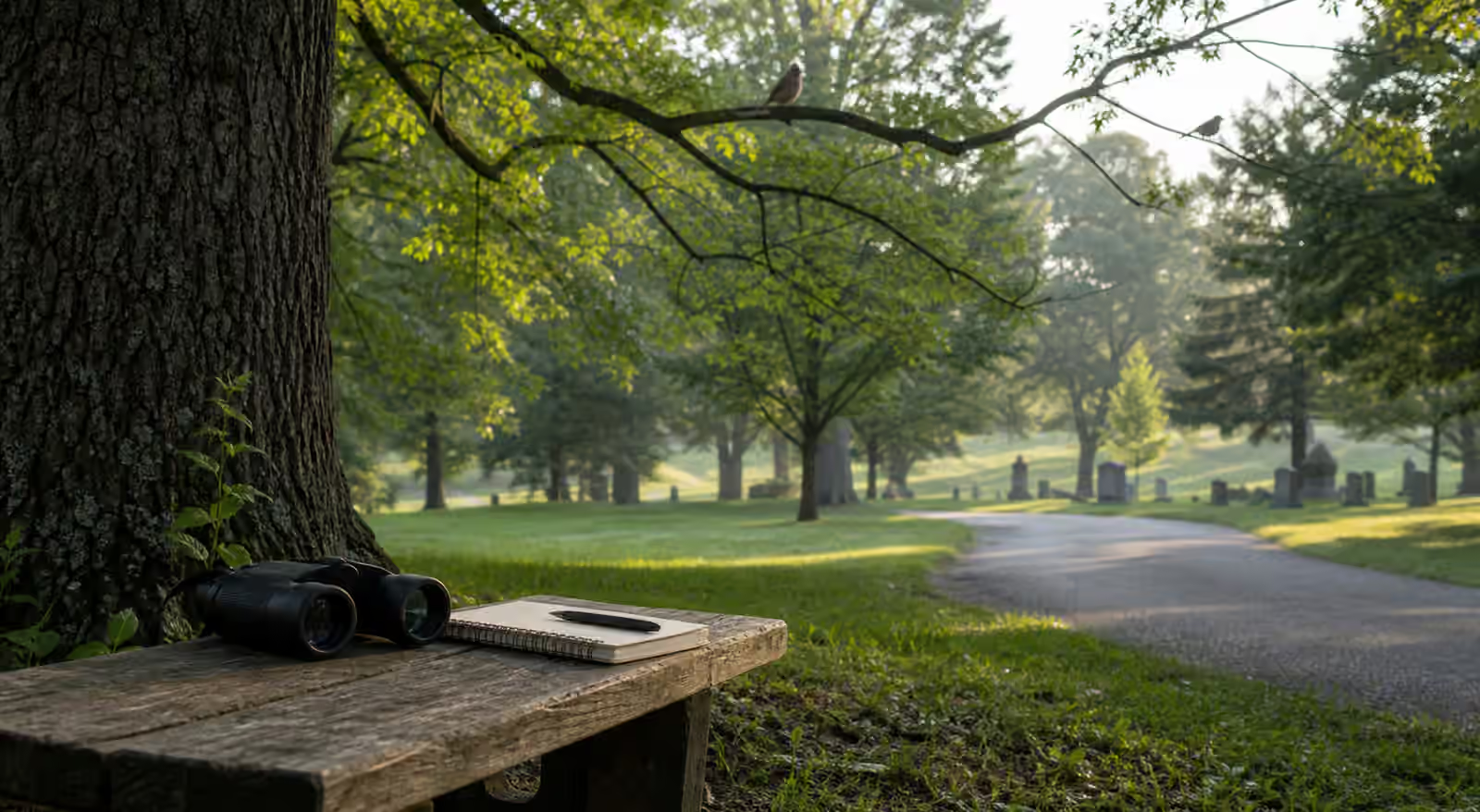
Cemeteries can be unexpectedly good birding places because they often preserve what many surrounding neighborhoods have lost: older trees, quiet lanes, rough edges, patches of grass, stone walls, shrubs, water features, and long gaps between heavy human activity. A cemetery is not automatically wild, but birds do not need a place to look wild to use it well. They need food, cover, nesting spaces, perches, and enough calm to move between them.
The first rule is respect. A cemetery is a place of memory before it is a birding site. Move quietly, stay on paths where that is expected, give visitors privacy, and do not aim optics toward people, ceremonies, homes, or maintenance workers. If birding feels intrusive on a particular day, leave and return another time. The habits in Birding Etiquette and Field Notes apply here with extra care because the setting asks for attention to people as well as birds.
When you approach the place with that restraint, a cemetery can teach patient habitat reading. It often combines the best parts of Urban Birding and Patch Birding : ordinary access, repeated routes, mature plantings, and seasonal change in one small landscape.
Read the Old Trees First
Mature trees are the center of many cemetery walks. Large trunks hold bark insects, cavities, sap wells, mossy crevices, broken limbs, and high song perches. Wide crowns give birds places to feed, sing, hide, and move out of the wind. A single old oak, pine, cedar, maple, cypress, sycamore, eucalyptus, or regional equivalent may hold more bird activity than a long row of young ornamental trees elsewhere.
Start with the trunk and major limbs before staring into the leaves. Woodpeckers, nuthatches, creepers, wrens, chickadees, tits, and other bark-using birds may announce themselves as movement against texture. A bird that disappears behind a trunk may reappear higher, lower, or on the opposite side if you step back and watch the whole tree. The guide to Woodpeckers for Beginners is useful here because cemetery trees often have the dead limbs, cavities, and rough bark that woodpeckers investigate.
Then scan the outer canopy. Migrants may feed quietly in leaf clusters, especially when insects gather in fresh growth or flowering branches. Vireos, warblers, orioles, tanagers, flycatchers, and local canopy birds may use cemetery trees during migration even when the surrounding streets seem quiet. In winter, bare branches make silhouettes easier, while evergreens can hold sheltering flocks. The tree is not just a background object. It is a layered birding site.
Walk the Edges, Not Only the Roads
Cemetery roads and paths make access easy, but the best birding is often along transitions. A line of old trees beside open grass, a hedge along a boundary wall, an unmown corner, a drainage dip, a shrub bed near a quiet lane, or a back edge meeting a park, schoolyard, field, or neighborhood garden can gather more birds than the neat center.
Edges work because birds can feed and retreat without crossing a huge exposed space. Sparrows may feed along low grass and retreat into shrubs. Thrushes may appear under shade where leaf litter gathers. Blackbirds and doves may use open lawns, while warblers and kinglets pass through nearby trees. Raptors may perch high where the view opens. Crows and jays may patrol the same route every morning. A cemetery can look open from a distance but contain many small edges once you slow down.
This is a good place to practice the habitat-first approach from Where and When to Go Birding . Instead of asking which bird should be present, ask what each corner offers. Is there fruit, shade, water, insects, seed heads, rough bark, low cover, or a quiet perch? The answer explains where your attention belongs.
Let Sound Set the Route
Cemeteries can be easier listening places than busy streets, especially early in the morning or during quiet parts of the week. Sound carries along lanes, bounces off walls, and gathers under trees. A repeated song from one tall crown, a dry chip from a hedge, a drumming sound from a dead limb, a jay call from a back corner, or soft contact notes in an evergreen can tell you where to pause.
Use the listening habits from Birding by Ear without turning the walk into a test. Stop where the path opens under trees and place each sound in the landscape. Was it high in the canopy, low in shrubs, along a wall, from open grass, or from a building edge? Did the sound stay put, move with a flock, or answer another bird across the grounds?
A cemetery route often becomes a sound map after repeated visits. One tall tree may hold the first singing bird of the morning. One hedge may stay quiet until migrants move through. One line of conifers may produce winter contact calls. One open corner may be good for flyovers because the sky is easy to watch. When you remember sounds by place, identification becomes less random.
Watch Lawns Without Dismissing Them
Short grass can look unpromising, but cemetery lawns often attract birds when the soil is damp, insects are active, seeds are available, or open space gives birds a clear view. Robins, starlings, blackbirds, doves, gulls, wagtail-like birds, thrushes, corvids, and local ground-feeding species may work lawns in loose groups. After rain or irrigation, worms and insects may come within reach. In winter, open grass may be one of the few easy feeding surfaces.
Do not march straight across a lawn toward feeding birds. Watch from the path. Notice spacing, alertness, and feeding style. Are birds probing, walking, hopping, running short distances, pulling at soil, or picking insects from the surface? Are they relaxed enough to keep feeding, or do they stretch upright whenever you move? Behavior tells you whether your distance is appropriate.
Lawns also create good comparison views. A bird in open grass can show posture, size, walking rhythm, tail action, and flock position better than a bird buried in leaves. This is useful for beginners because familiar common birds become reference points. Once you know how a robin, blackbird, dove, crow, or gull looks on the ground in your area, a different bird stands out sooner.
Use Repetition and Season
A cemetery is often strongest as a repeated route. One visit may be quiet. Ten visits may reveal a calendar. Spring brings song, nest material, migrants, and flowering trees. Early summer may bring family groups and more hidden movement. Late summer can be subtle, with worn adults, juvenile birds, and insect feeding in shade. Fall may make fruiting trees, hedges, and canopy edges important. Winter opens views into old trees and gathers birds around evergreens, water, fruit, and sunny sheltered corners.
Keep notes on the place, not only the species. Write that the old cedar row held small calling birds on a windy morning, that the damp lawn near the north wall had feeding thrushes after rain, or that the flowering tree by the side lane was active for three mornings and then quiet. Those notes help you understand the cemetery as habitat rather than as a list of names.
The same route also teaches restraint around breeding season. If you see food carrying, alarm calls, nest material, or young birds, the useful response is distance. Nest Season Birding explains why the best observation may be brief and general. In a cemetery, exact locations should be handled with care because both birds and people deserve privacy.
Leave the Place as Quiet as You Found It
Good cemetery birding is quiet, observant, and easy to interrupt. If visitors arrive nearby, move on. If maintenance crews are working, do not make their job harder. If a path is narrow, step aside without making a scene. If birds flush repeatedly from a hedge or tree line, back off. The goal is not to extract every possible view from the place. The goal is to learn what the place offers while remaining a considerate guest.
There is a particular pleasure in cemetery birding because the lessons are modest. You learn one old tree, one hedge, one lawn after rain, one quiet corner under conifers, one morning flight line over the wall. The birds become part of the landscape instead of trophies pulled from it. That is enough. A respectful route through mature trees can make you a better birder without requiring distance, drama, or a famous destination.