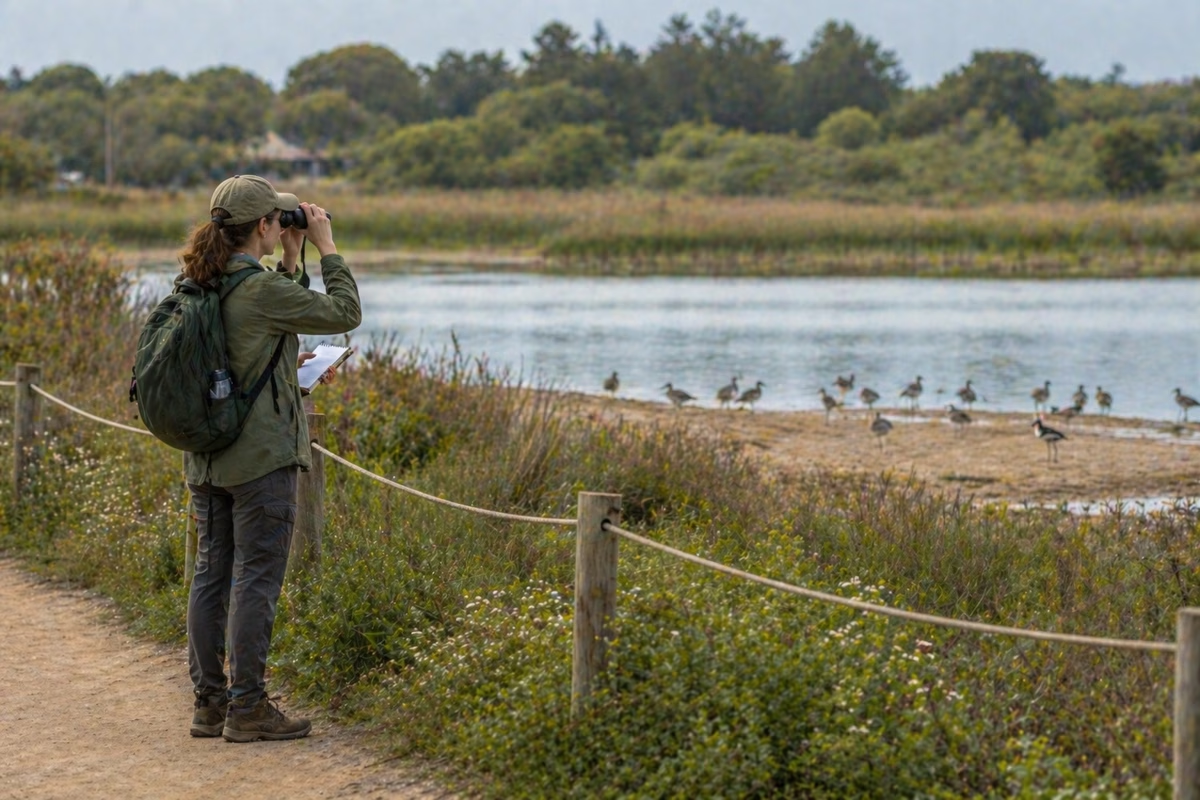
Birding is a quiet hobby with real consequences. The way you move, share, photograph, and record sightings can affect birds, habitats, and other people trying to enjoy the same place.
Good etiquette is not about being stiff. It is about remembering that the bird is not performing for you.
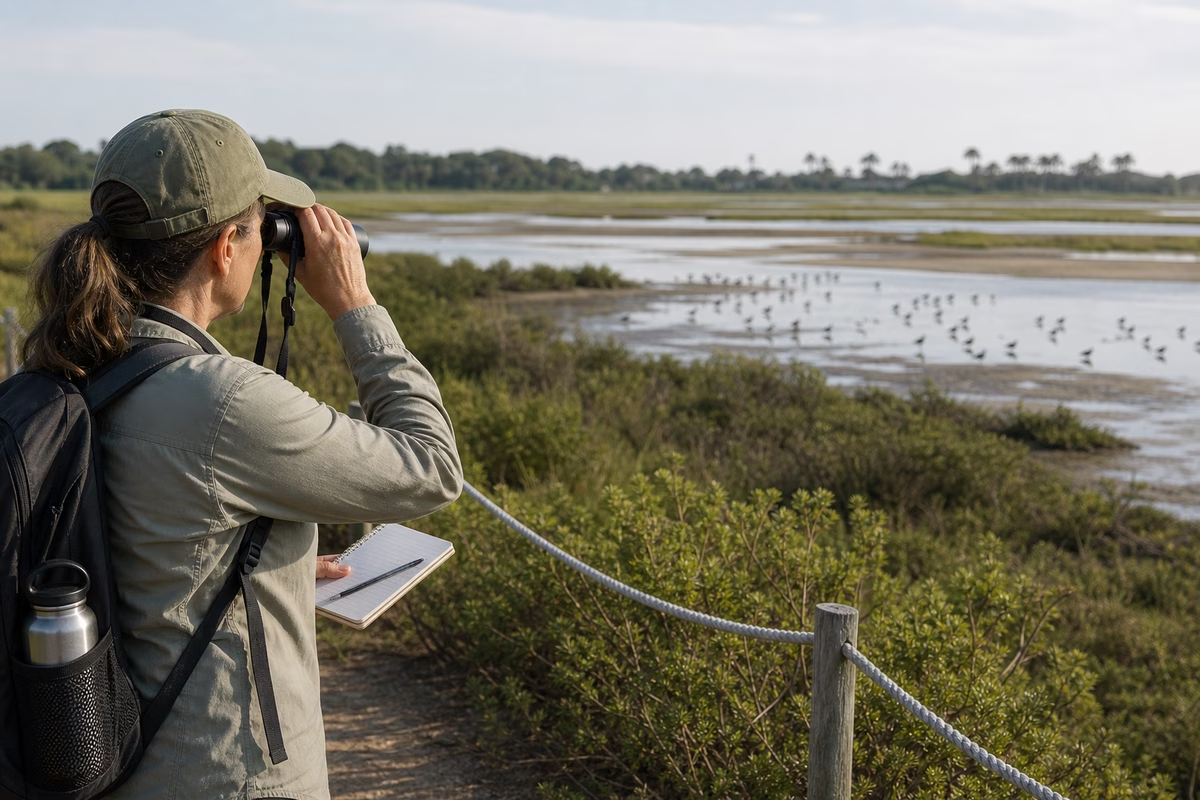
Keep distance
The cleanest rule in birding is simple: do not crowd birds.
Binoculars exist so you do not have to get close. If a bird stops feeding, stretches tall, alarm-calls, moves away, or keeps glancing at you instead of doing what it was doing, you are too close.
This matters most around:
- nests
- roosts
- feeding flocks
- shorebirds resting on beaches
- owls during the day
- rare birds attracting attention
- exhausted migrants
Birds spend energy every time they flush. During migration, winter, breeding, or bad weather, that energy can matter.
Be careful with nests
Nest watching is fascinating, but it demands restraint.
Do not approach repeatedly. Do not clear branches for a better view. Do not share exact nest locations casually. Do not linger so long that adults avoid returning with food.
If you find a nest by accident, step away and watch from a distance if you can do so without pressure. A successful nest is more important than a photograph or a perfect note.
Use sound responsibly
Playing bird calls can draw birds closer or make them respond as if a rival is nearby. It is especially sensitive during breeding season and around rare or stressed birds.
As a beginner, keep playback to a minimum. If you use it for learning, use it quietly and away from birds, or listen through headphones. In the field, ask yourself whether your need to hear or see the bird is worth disturbing it.
Often the answer is no.
Share sightings with care
Birders like sharing. It helps people learn and contributes to community knowledge. But not every sighting should be broadcast with exact location details.
Be cautious with:
- nesting owls and raptors
- sensitive species
- birds on private property
- rare birds in fragile habitat
- places where crowds could cause damage
When in doubt, share a general area or wait. Local birding groups often have norms around sensitive sightings. Follow them.
Respect private and working land
Birds do not know property lines. People do.
Do not block driveways, climb fences, enter fields, stand in roads, or aim optics into homes. On farms, beaches, preserves, and parks, follow posted rules. If a place is closed for nesting birds or habitat restoration, treat that as part of the birding experience, not an inconvenience.
Access depends on trust.
Be decent to other people
Many good birding spots are shared with walkers, runners, anglers, photographers, families, dog owners, maintenance crews, and people who are simply trying to sit quietly.
Keep paths passable. Avoid shushing strangers like you own the woods. If someone asks what you are looking at, answer kindly if you have the bandwidth. A generous thirty-second explanation can turn a passerby into someone who cares more about the place.
With other birders, be clear but calm. If you are pointing out a bird, use landmarks: “top of the dead branch, left side of the tall pine, moving down.” Do not grab someone’s binoculars or scope without permission.
Field notes that actually help
Good notes are specific and humble.
Record:
- date and time
- location
- weather
- habitat
- species if known
- count if you can estimate it
- behavior
- sound
- field marks
- confidence level
A useful note might read:
April 26, city pond, cool and overcast. Two small ducks near reeds, compact bodies, one male with green head, both dabbling not diving. Mallards, confident.
Another might read:
Unknown warbler-sized bird, olive above, yellowish below, two pale wing bars, moving fast through willow branches, no song heard, brief look only.
That second note is not a failure. It is honest data.
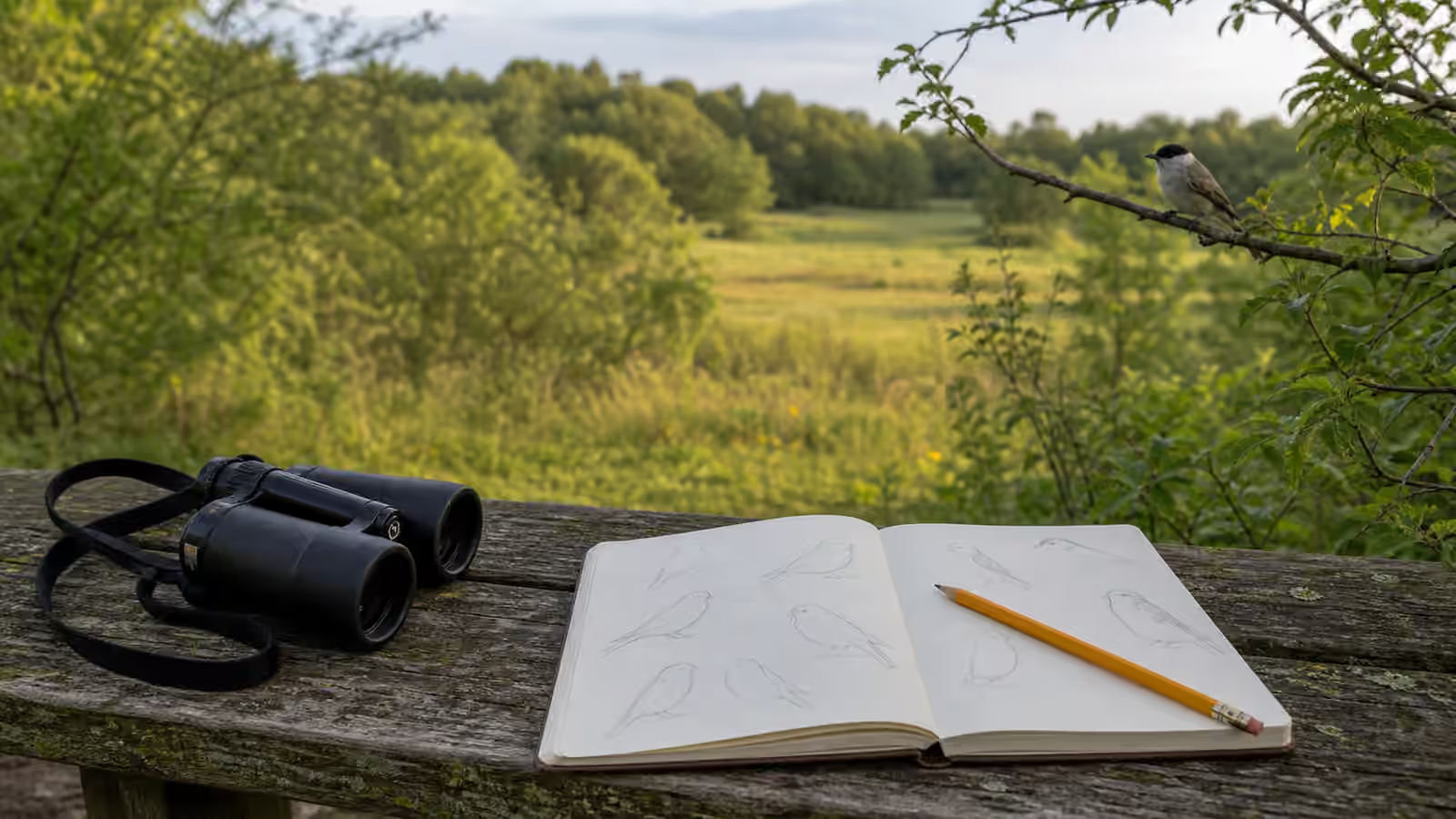
Sketch badly
You do not need to draw well for sketches to help.
A bad sketch can capture:
- tail length
- bill shape
- crest
- posture
- wing patch
- face pattern
- where color appeared on the body
Label the sketch with words. “White outer tail feathers” beside a rough tail drawing is more useful than a pretty but vague picture.
Count in practical ways
Counting birds is easy when there are three ducks and hard when there are two hundred blackbirds.
Use rough methods:
- exact count for small groups
- count by fives or tens for medium groups
- estimate blocks for large flocks
- write “at least” when birds are hidden or moving
Do not pretend precision you do not have. “At least 40” is better than a fake exact 47.
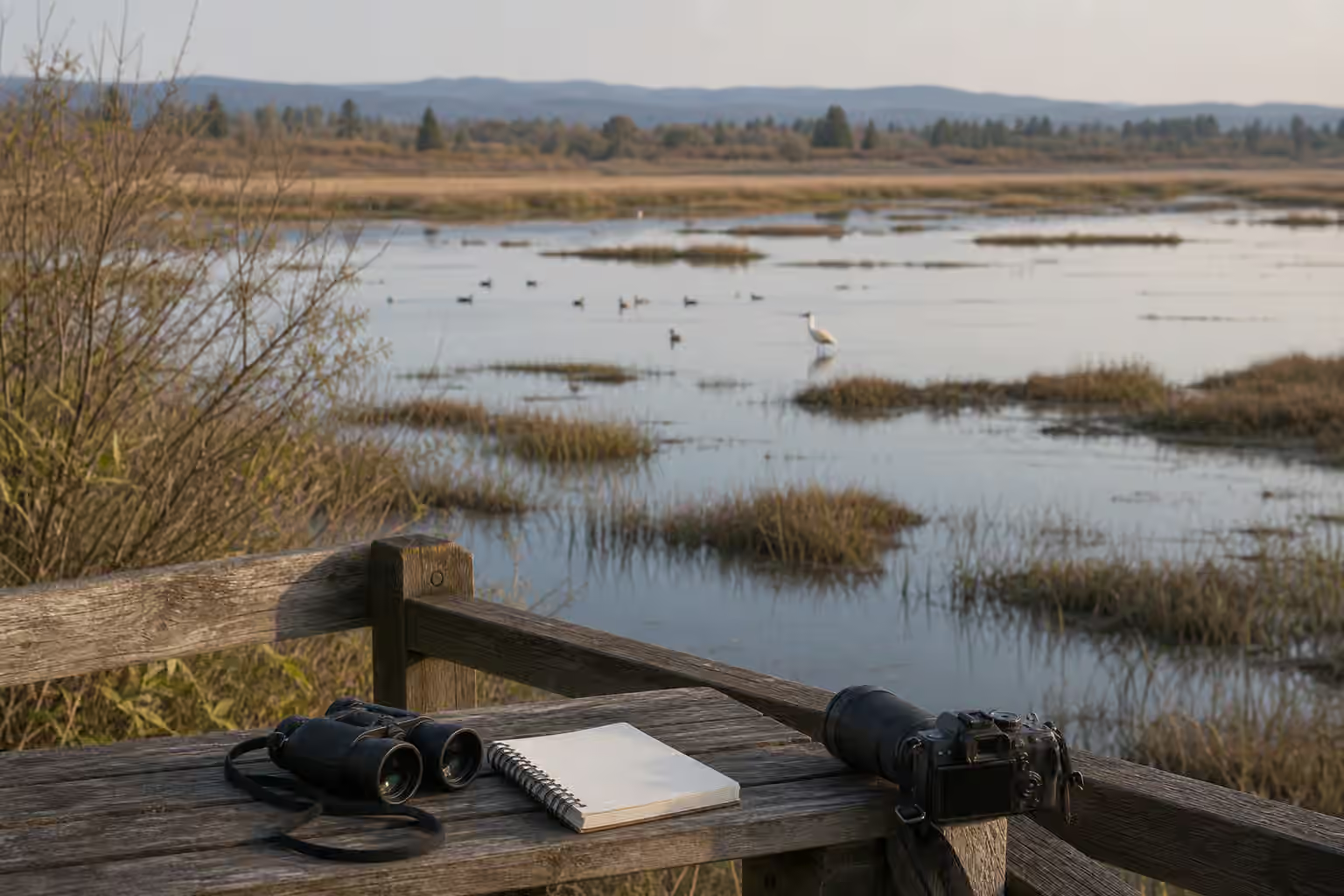
Photos are notes, not trophies
Photos can be excellent documentation. They can also pull you out of observation.
If you photograph birds, take the shot, then watch. Do not push closer for a cleaner frame. Cropped, distant photos are often enough for identification. The bird’s comfort matters more than your image quality.
Also, look at your photos later with caution. Cameras freeze odd angles and colors. Use them as evidence, not as the whole story.
Review after the walk
Spend five minutes after birding cleaning up your notes.
Add names you confirmed, mark uncertain birds, and write one thing you learned. If you use a listing app or database, enter sightings while the memory is fresh. If you keep a paper notebook, add a small summary: “First swallows of spring over the pond” or “Need to learn sparrow face patterns.”
Review turns scattered sightings into knowledge.
A simple field code
When in doubt:
- stay back
- keep quiet
- leave habitat as you found it
- do not pressure birds for photos
- share sensitive sightings carefully
- be kind to people
- write honest notes
That code will carry you through most situations.
What to read next
If you are still building confidence, go back to Birding Quickstart and repeat the first-hour exercise. If identification is the hard part, use How to Identify Birds Without Guessing on your next walk.
How to use this guide well
A strong guide is not only a reference page. For Birding Etiquette and Field Notes, the useful work is to connect the idea to a real choice, routine, object, place, or conversation. Read the page once for orientation, then return to the part that changes what you will do next.
Start with the situation in front of you. What are you trying to decide, fix, buy, compare, build, maintain, or understand? The clearer the situation, the less likely you are to treat every detail as equally important.
Then look for the tradeoff. Most good Birding decisions involve comfort, cost, effort, timing, skill, maintenance, risk, or taste. A guide becomes practical when it shows what you gain, what you give up, and what evidence would change your mind.
Keep one small note after you act. Write what you tried, what happened, and what you would repeat. That habit turns the guide from a page you read into a skill you carry.
Birding Etiquette and Field Notes should leave you with more than facts. It should make the next step easier to see and easier to do.
What to notice after you use this guide
After reading Birding Etiquette and Field Notes, choose one next action that can be observed. A guide becomes more valuable when it changes a real choice, not only when it adds more facts.
Name the context. Where are you, what are you trying to improve, and what would count as a good result? The answer keeps the advice grounded in daily life.
Change one variable first. A small controlled change teaches more than a dramatic reset because you can tell what mattered.
Keep one note. Write the date, the choice, the outcome, and the thing you would repeat. The note can be plain and still useful.
Look for tradeoffs. Better birding decisions often involve cost, time, maintenance, comfort, fit, risk, or skill. Seeing the tradeoff makes the decision calmer.
If the result is unclear, wait before adding another fix. Some lessons need a second use, a different day, or a quieter comparison.
If the stakes are high, use qualified sources and professional guidance where appropriate. A guide can organize the question, but it should not pretend to replace expertise.
The goal is practical confidence. Birding Etiquette and Field Notes should make the next step easier to choose and easier to repeat.