Finches and other seed-eating birds can look plain until you learn what the bill is telling you. A small bird in dry weeds may flash yellow, red, brown, white, or nothing obvious at all. It may hang from a seed head, drop into grass, rise in a loose flock, call from overhead, and vanish before the binoculars settle. If you chase color first, the whole group becomes frustrating. If you start with food, bill, flock, and flight, the field opens.
This guide is not only about birds with the word finch in their name. Many beginners meet seed-eaters as a wider field problem: finches, buntings, sparrows, siskins, redpoll-like birds, grosbeaks, crossbill-like birds, blackbirds at grain fields, and local equivalents that gather where plants have gone to seed. Sparrows and Little Brown Birds handles one difficult corner of that world. Finches add another lesson because their bills, flock habits, and seasonal movements make seed sources feel alive.
Read the Bill Before the Color
Seed-eating birds often carry their feeding method on their faces. Some have small neat conical bills for tiny seeds. Some have heavy triangular bills that can crack tougher food. Some show crossed bill tips for working into cones. Some have slimmer bills and feed on a mix of seeds and insects depending on season. The exact species change by region, but the principle holds. A bill is not decoration. It is a tool.
When a bird pauses, look at the bill from the side if you can. Is it short and deep, long and pointed, thick at the base, delicate, or oddly curved? Does the head look large because the bill is heavy? Does the bird handle a seed head with precision or crush larger food with obvious force? A flash of color may vanish in bad light, but a strong bill silhouette can remain useful.
This is the same discipline used in How to Identify Birds Without Guessing . Size and structure come before decoration. A brown bird with a heavy pale bill is not the same field problem as a brown bird with a thin probing bill. If you can describe the tool, you are already closer to the bird’s life.
Seed Plants Make Temporary Birding Sites
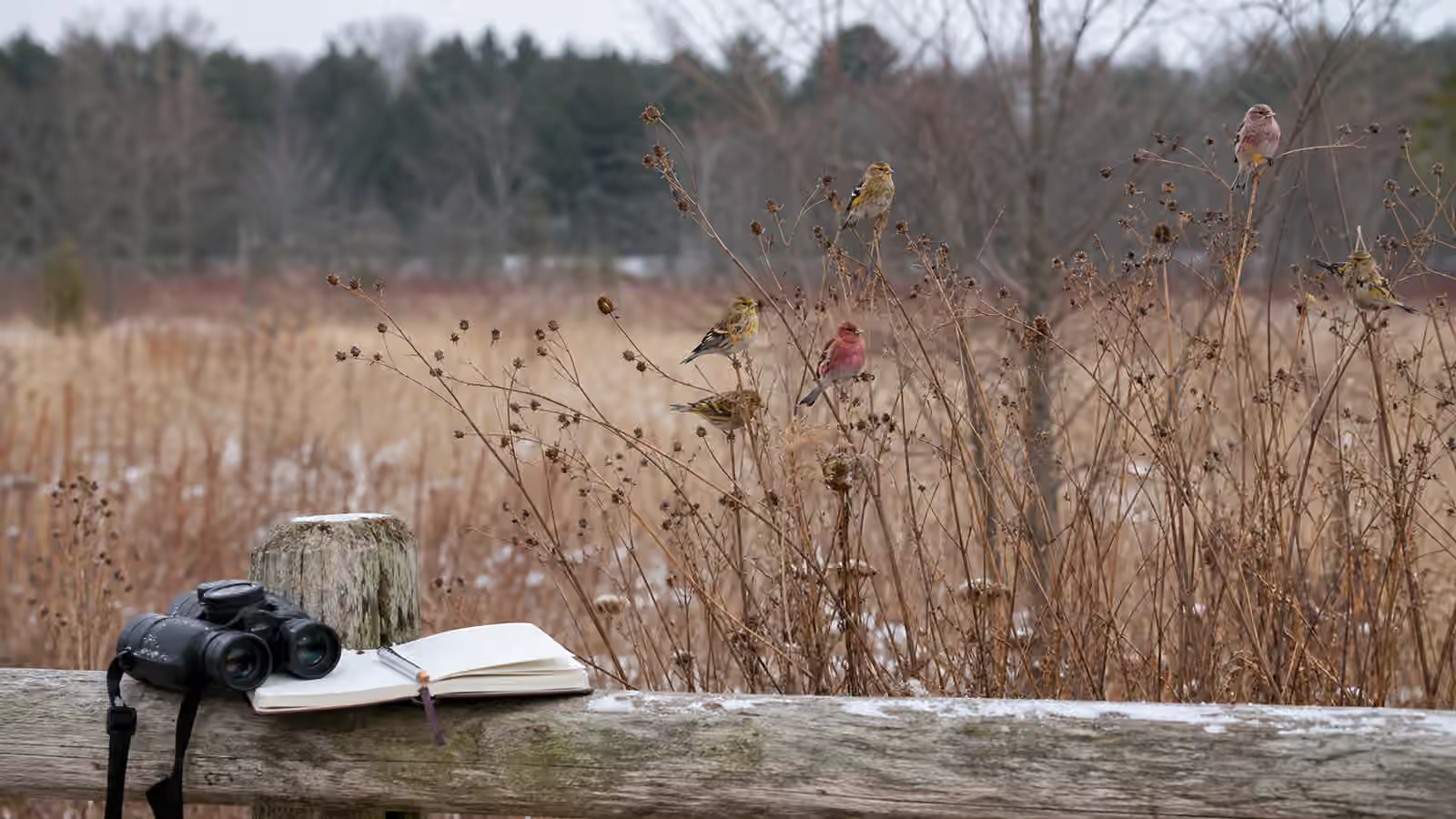
Many seed-eating flocks gather around plants that humans overlook. Dried thistle, sunflower, grasses, alder catkins, birch catkins, weeds along a fence, cone-bearing trees, spent garden beds, and unmowed field edges can all hold birds. The useful question is not whether the place looks tidy. It is whether food remains.
Finding Birds by Food Sources gives the wider habit of reading berries, flowers, seeds, and insects. With finches, the seed source may be narrow and seasonal. One line of trees can be busy for a week and quiet afterward. A weedy patch can look empty until a flock drops in, feeds intensely, and lifts again. Cone crops can shape where certain finches appear from year to year. A local birder who watches plants will often understand these movements before someone who only watches open lawns.
Stand at the edge before entering the patch. Seed-eaters can be nervous, and many feed low. If you walk into the food, the flock may flush to distant trees and the lesson is over. From the edge, look for bending stems, falling seed fluff, quick vertical climbs along stalks, and small shapes hanging upside down. Listen for soft contact calls. A field may be full of birds before it looks full.
Flocks Are Part of the Field Mark
Finches often teach beginners to watch groups rather than single birds. A flock can reveal size differences, feeding rhythm, and caution. Some birds cling to seed heads while others wait in shrubs. Some feed high in trees and drop only briefly. Some move as a tight group with quick calls, while others scatter loosely through the plants. A single bird gives details; a flock gives behavior.
Flocks also create comparison. One bird looks large only after a smaller bird lands beside it. A notched tail becomes easier when several birds turn at once. Wing bars, rump flashes, and flight style may show repeatedly as birds shift from weeds to trees. The flock is not visual noise. It is a repeating lesson.
Do not assume every bird in a seed-eating flock is the same species. Mixed flocks happen, especially where food is concentrated. Sparrows may feed below finches. Blackbirds may pass through a field edge. Chickadees or warblers may use nearby shrubs for insects while seed-eaters work the stalks. Mixed Flocks Birding helps with this skill: follow the movement, then separate the players.
Flight Calls Can Be the First Clue
Many finches and seed-eaters announce themselves overhead with short calls. A flock may pass as chips, twitters, rising notes, dry rattles, or quick phrases before you see a single bird clearly. The exact voice depends on your region, but the practice is stable. Learn the common flight calls around your own patch slowly, one at a time, by connecting sound to visible birds whenever possible.
The mistake is to memorize sound files without field context and then force every overhead note into the nearest memory. Instead, use the method from Birding by Ear . Notice pitch, rhythm, direction, height, and group size. Was the call from a tight flock crossing open sky, a few birds bouncing along a tree line, or a hidden group feeding in alders? Did the sound continue after the birds landed? Did the flock circle back to the same seed source?
When you cannot identify the call, write it anyway. “Small flock overhead, quick dry chips, landed in birch, several small finch-like birds feeding on catkins” is a useful note. It gives you something to compare next time and keeps the uncertainty attached to real behavior.
Season Changes the Puzzle
Seed-eating birds often make winter and migration more interesting. When leaves fall and flowers fade, seeds, cones, and catkins become visible birding clues. Winter Birding is partly a lesson in where food remains when the landscape looks bare. Finches fit naturally into that lesson because they may gather in numbers, move unpredictably, or appear in places that were quiet in summer.
Spring and summer are not empty for seed-eaters. Some birds sing from exposed perches, carry food, feed young, or use weedy edges after nesting. But their field behavior may change. A flock that was loose and mobile in winter may become territorial or quieter in breeding season. A bright male may draw the eye, while a duller female or young bird nearby carries the same structure in subtler colors. Molt and Seasonal Plumage helps here because seed-eaters, like all birds, change through wear, age, and season.
Food can also be irregular. Some years produce heavy cone or seed crops. Other years do not. Birds that depend on those foods may shift, wander, or concentrate where the crop is better. You do not need to predict these movements perfectly. You need to notice that the birds are responding to conditions, not appearing at random.
Feeders Are Only One Window
Many people first meet finches at feeders, and feeders can be useful for learning bill shape and close comparison. They can also narrow your idea of the birds if you stop there. A feeder bird is showing one version of its life. The same bird in a field, orchard, alder stand, or cone crop may behave differently. It may feed with a flock, use natural cover, call in flight, or vanish into seed heads where a feeder never taught you to look.
If you use feeders, keep them clean and place them with care to reduce obvious hazards around windows and predators. Backyard Bird Habitat treats the home patch more fully. For field learning, try to connect feeder observations to wild food. A bill that cracks a feeder seed also explains why the bird visits a dried plant. A flock that waits in a shrub before approaching a feeder may use the same caution at a meadow edge.
Notes That Preserve the Food Story
A good seed-eater note includes more than a name. Write the plant or food source if you can describe it. Add flock size, feeding height, bill impression, call, and movement. “Twelve small finches feeding high in alder catkins, tight flock, dry flight calls when flushed.” “Heavy-billed birds cracking seeds in weedy field, several perched on fence, one yellowish male seen briefly.” “Mixed sparrows and finch-like birds low in goldenrod, flushed to shrubs, returned after two minutes.”
These notes help future walks because seed sources repeat in patterns. You may learn that one field edge is good after the first hard frost, that one stand of trees holds birds only when the catkins are full, or that a feeder is less interesting than the weedy corner behind it. The birds become less random because the food becomes visible.
Finches and seed-eating birds reward a quieter kind of attention. They ask you to value dry plants, plain bills, overhead chips, and restless flocks. Once you learn to read those signs, a brown winter field stops looking finished. It becomes a table, a shelter, and a map of small lives moving through the season.