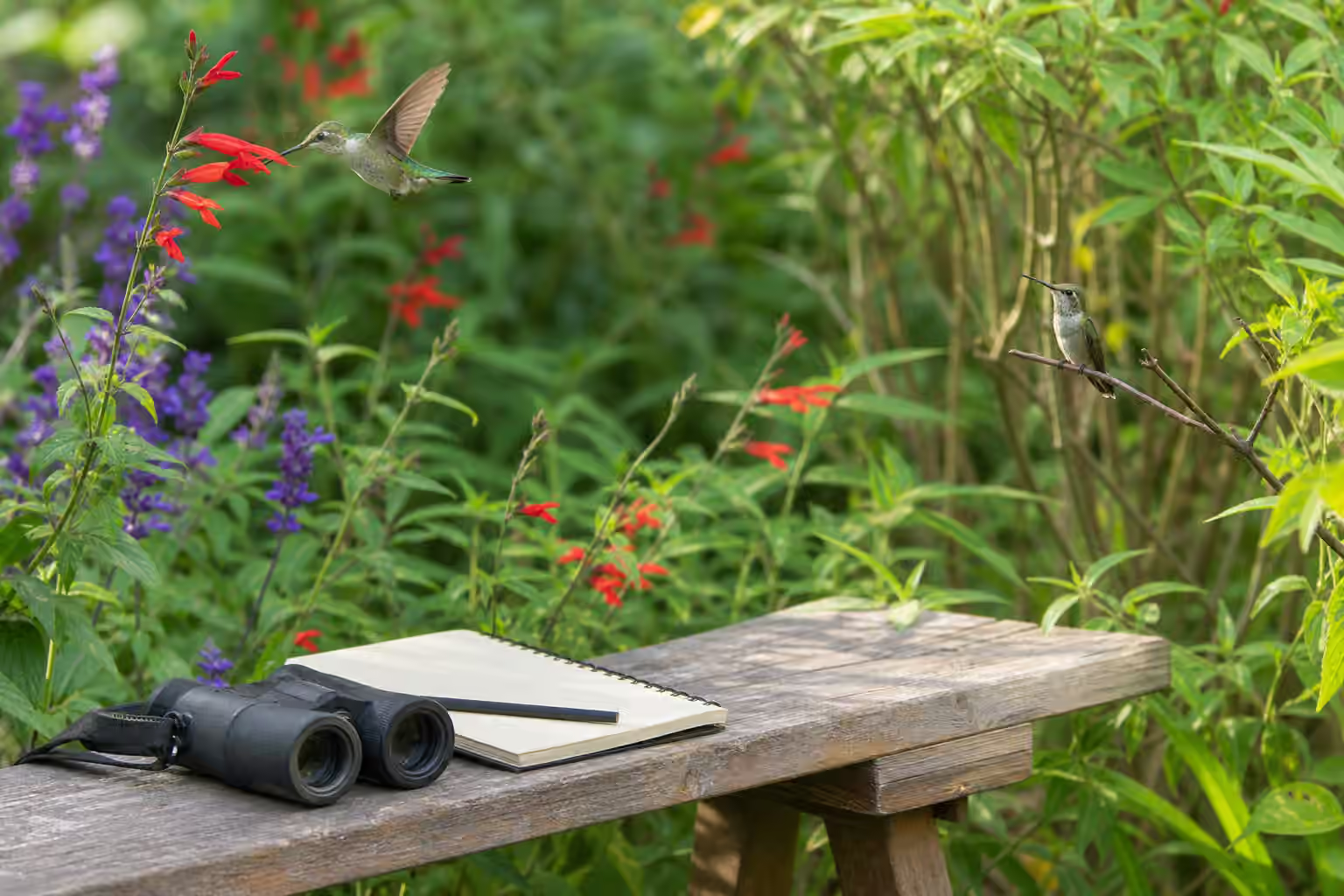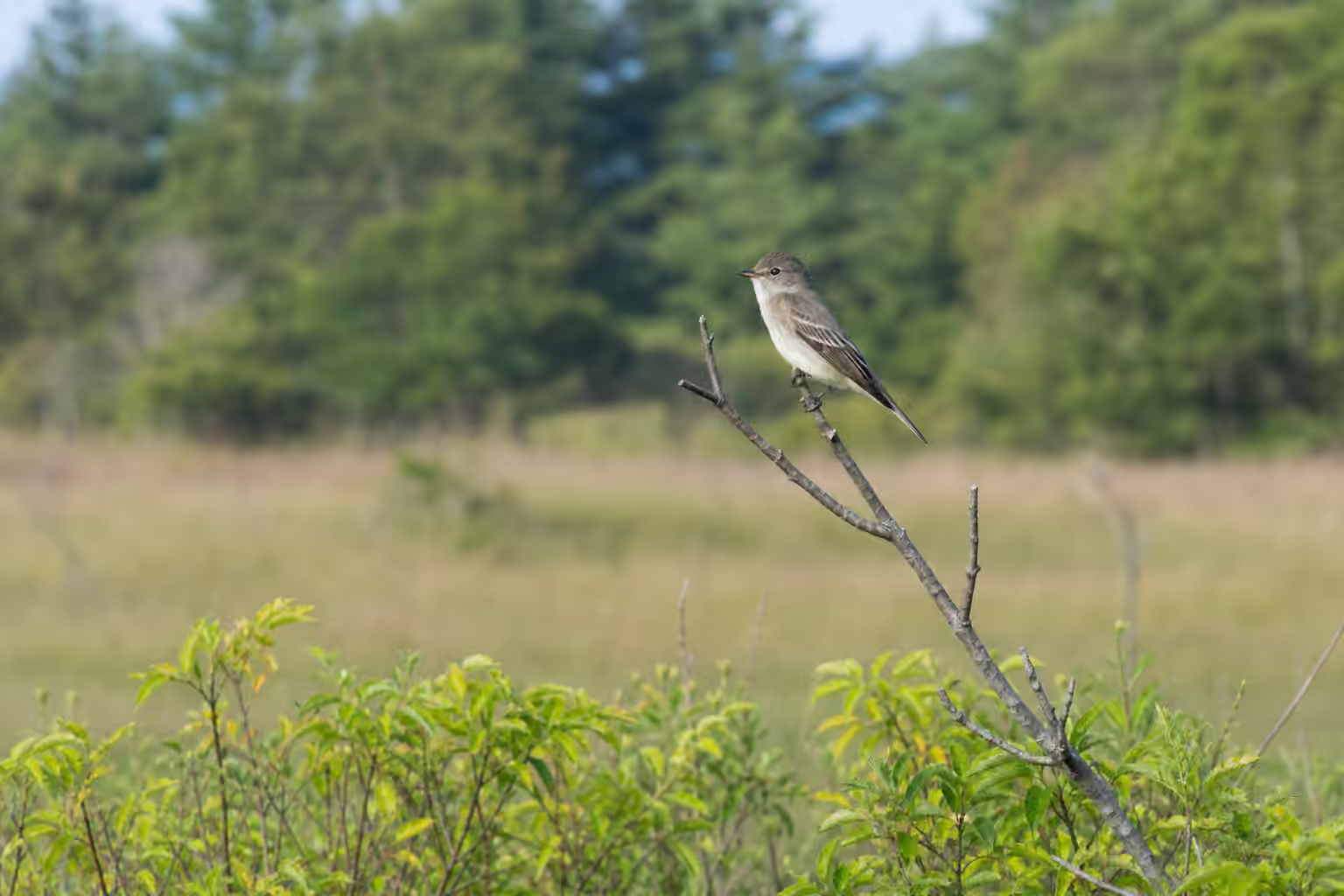
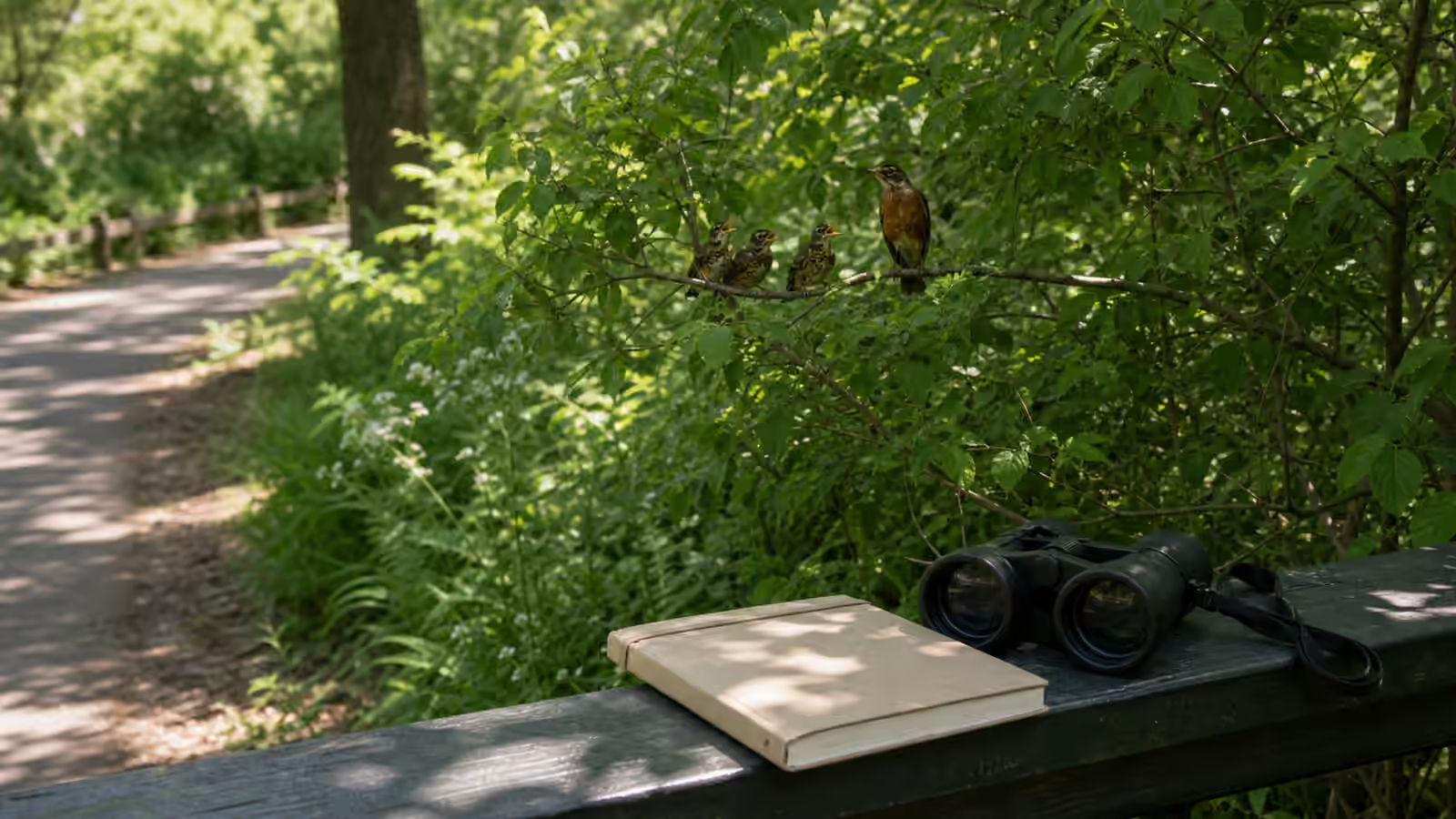
Young birds can make a familiar place feel unfamiliar. A bird that should be obvious looks spotted, streaked, fluffy, short-tailed, dull, loose-feathered, or oddly shaped. Another sits in the open and calls with a restless wing flutter while an adult appears nearby with food. A small group moves through shrubs with several birds that look similar but not identical. The scene can be charming, confusing, and ethically delicate all at once.
This guide focuses on watching young birds without turning curiosity into pressure. It builds on Nest Season Birding , Molt and Seasonal Plumage , and Reading Bird Behavior for Beginners . Those guides explain the larger season, feather changes, and behavior clues. Juvenile birds bring all three together in one lively, sometimes messy field lesson.
Begin With Distance
Distance is the first field mark because young birds are often vulnerable in ways that are not obvious to a beginner. A fledgling on the ground may be in a normal stage between nest life and strong flight. Parents may be nearby, waiting for people to move away before bringing food. A bird that looks clumsy may still be where it belongs. Approaching for a better view can interrupt care, draw attention to the bird, or push it into a worse place.
Watch from where you are. If adults are alarm-calling, circling, carrying food but refusing to approach, or tracking your movement, you are too close. Step back and let the family settle. If the bird is near a path, road, dog, or other immediate concern, the safest action depends on local circumstances and should not become a dramatic handling scene. For ordinary birding, the useful habit is simple: observe briefly, keep pets away where you have control, avoid touching, and give adults room to do their work.
Binoculars are valuable here because they let you see without intruding. A short distant view of normal family behavior is better than a close view that changes the behavior.
Recognize Begging Without Assuming Trouble
Begging can look urgent because it is meant to get attention. Young birds may flutter wings, crouch, gape, call repeatedly, follow adults, or shake with exaggerated motion when food arrives. This does not automatically mean the bird is abandoned, starving, or in need of human intervention. It often means the family system is working in full view.
Watch the adult’s response. Does an adult arrive with food? Does the young bird follow it? Are there several young birds calling from different parts of the same shrub or tree? Does the adult feed one, move away, then return later? Family groups can be noisy and inefficient. Young birds are learning where to stand, how to feed, when to hide, and how to move through the habitat.
The behavior is also useful for identification. A begging juvenile may reveal its relationship to an adult you can name. If an adult robin-like bird, blackbird, sparrow, finch, corvid, or warbler repeatedly feeds a young bird, the family connection gives you a strong clue. Still, be careful. Some species feed young that do not look much like the adult yet, and brood-parasitic relationships exist in some regions. Treat behavior as evidence, not as a shortcut that ends observation.
Expect Plumage That Looks Unfinished
Juvenile plumage often softens or rearranges the marks beginners rely on. A young bird may have spots where the adult has a plain breast, streaks where you expected clean color, pale gape edges around the bill, shorter tail feathers, fluffier body feathers, duller tones, or a face pattern that is only partly developed. Water birds, gulls, raptors, herons, sparrows, blackbirds, and songbirds can all look different enough to cause second guesses.
This is where Molt and Seasonal Plumage becomes practical. Do not ask why the bird fails to match the adult field-guide image. Ask what age clues you can see. Is the tail short? Are feathers fresh and soft? Is the bird begging? Is it moving with adults? Is it part of a loose group of similarly odd birds? Is it in the season when young birds are expected?
Color may be less helpful than structure and behavior. A young bird in shade can look dull, and new feathers can change quickly. Bill shape, body shape, posture, movement, habitat, and family association often carry more weight. A sketch or written note may preserve the oddness better than a forced name.
Watch Family Groups as Moving Lessons
A family group is not just a collection of young birds. It is a set of relationships. Adults may lead, feed, warn, or herd. Young birds may follow badly, call from exposed places, copy feeding movements, or scatter into cover when danger appears. The group may use a hedge, lawn, marsh edge, woodland path, feeder area, or waterline in a way that reveals what the birds need at that moment.
Stand still and watch the route. Where do the young birds wait? Where does the adult search for food? What cover does the family return to? Do they cross open ground quickly? Do they freeze when a crow, hawk, person, or dog passes? Do they move through one shrub line or several? These questions make the scene more useful than a close portrait would.
Family groups are good teachers in common species. A familiar bird feeding young may show the rhythm of local breeding season better than a rare sighting ever could. You may learn how long adults keep bringing food, where young birds hide, which shrubs matter, and how alarm calls change the behavior of the whole group.
Connect Young Birds to Habitat
Young birds appear where adult birds can find food and cover. That may be a dense hedge, a quiet tree, a wet ditch, a marsh edge, a lawn after rain, a fruiting shrub, a brush pile, or a patch of insects in leaves. Instead of treating the young bird as an isolated event, read the habitat around it.
Food often explains the movement. Adults carrying caterpillars, small insects, seeds, fruit, fish, or other prey may follow repeated paths. A young bird waiting in shade may be safer than one sitting in the open. A group moving through shrubs may be using cover between feeding stops. Finding Birds by Food Sources can help you see why one corner is busy while another is quiet.
Habitat also explains why exact locations should be handled carefully. Sharing a precise spot for a nest, fledgling, or family group can attract pressure. Even well-meaning observers can create repeated disturbance. If you keep notes or submit checklists, describe behavior and general habitat without turning a vulnerable place into a target.
Write Notes That Preserve Uncertainty
Young birds reward careful notes because they often make identification harder. Write the evidence before the memory tidies itself. Note the adult if seen, the young bird’s size, posture, tail length, bill shape, plumage texture, begging behavior, food carrying, habitat, distance, and your own effect on the scene. If you moved away and adults resumed feeding, that belongs in the note too.
Do not be embarrassed by partial identifications. “Juvenile sparrow-like bird begging from low hedge, adult nearby not seen well” is more honest than a confident wrong name. “Young robin-like bird with spotted breast following adult across damp lawn” preserves the clues that mattered. Birding Checklists and Local Records is useful because it treats notes as learning, not merely proof.
Photography should be restrained. A distant record photo can support a note, but repeated close approaches to a young bird are not worth it. If the bird is hiding, let it hide. If an adult is waiting, move on. Some of the best juvenile birding happens after you step back and the family returns to normal.
Let the Season Stay Complicated
The season of young birds is full of mixed signals. Adults may be worn from breeding. Some birds may still be singing while others are feeding young. Fledglings may sit in the open and look helpless while actually being attended. Juveniles may make common species look rare. Family groups may appear in places where you had not noticed nesting behavior at all.
That complexity is part of the education. Young birds show that identification is not only about adult color patterns. It is about life stage, behavior, habitat, timing, and relationship. The more calmly you watch, the more useful the scene becomes.
A good encounter with juvenile birds may end with fewer photos and better understanding. You saw where the family moved, how the adult delivered food, how the young bird begged, what cover mattered, and how your distance affected behavior. That is real birding. It leaves the birds room to continue their day and gives you a clearer picture of the living season around you.