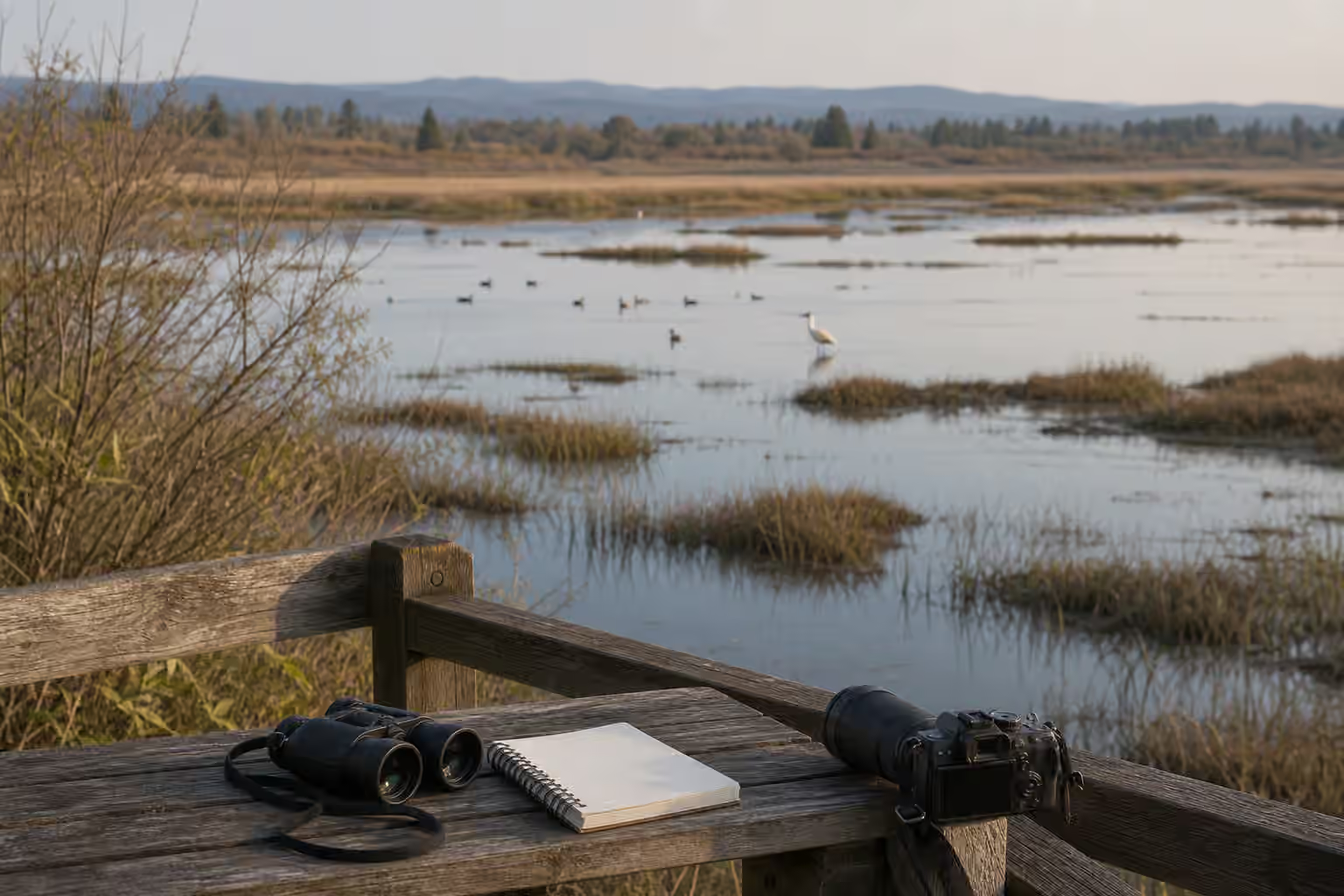
Rare birds make birding exciting because they interrupt expectation. A bird appears far from its usual range, at an unusual season, or in a place where local birders do not often see it. People talk. Alerts move quickly. A quiet path can become a destination. The excitement is real, but it can also distort the way beginners learn. If every outing becomes a search for the unusual, the common birds never become familiar enough for the unusual to stand out.
This guide belongs beside Birding Etiquette and Field Notes , Birding Checklists and Local Records , Using Field Guides and Bird Apps , and Migrant Trap Birding . Rare-bird birding is not a separate hobby with separate manners. It is ordinary fieldcraft under social pressure.
Learn the Expected Birds First
The best preparation for a rare bird is not an alert. It is familiarity with what should be there. When you know the common gulls in a local flock, an odd gull has context. When you know the usual sparrows in a field, a different face pattern or posture means something. When you know how local ducks sit on the water, a stranger’s structure stands out. Without that baseline, rarity becomes guesswork with excitement added.
Expected birds are not a consolation prize. They are the comparison set. Gulls for Beginners makes this point clearly because gull flocks often attract rarity hunting. The ordinary adults, immature birds, resting postures, molt stages, and local variation are what make an unusual bird detectable. The same idea applies to shorebirds, raptors, warblers, waterfowl, finches, and nearly every other group.
A beginner can still go see a reported rarity. Just treat it as a lesson in comparison rather than a trophy. Ask what makes the bird different from the expected birds around it. Notice size, structure, behavior, habitat, voice, and timing. If someone points out a mark, connect it to the whole bird. A rare bird is still a bird in a place, doing something.
Read Reports With Care
A rare-bird report is useful, but it is not the bird itself. Reports vary in detail. Some include photos, time, exact location, behavior, access notes, and confidence level. Others are brief, secondhand, or vague. Before you go, read carefully enough to understand what is known and what is not.
Pay attention to access and sensitivity. Is the bird on public land, private land, a refuge trail, a neighborhood street, a beach, a cemetery, a farm field, or a fragile marsh edge? Are there instructions about parking, paths, viewing distance, or avoiding certain areas? Has the bird been seen repeatedly, or was it a single passing observation? Is the location precise for good reason, or intentionally general to protect the bird or site?
Field apps and message groups can make reports feel immediate, but speed is not the same as judgment. A bird may leave. A site may become crowded. A landowner may be uncomfortable. A sensitive species may not need more attention. The guide to Birding Checklists and Local Records is useful here because records should serve birds, places, and learning, not only personal excitement.
Keep the Bird’s Needs in the Center
The most important rare-bird rule is simple: do not make the bird’s situation worse. Many rare birds are migrants, weather-displaced individuals, tired travelers, or birds trying to feed in unfamiliar habitat. Even when the bird looks calm, repeated close approaches, playback, crowding, trampling, blocked feeding routes, or flushing can add pressure.
Distance matters. Use binoculars, scopes, and patience. If the bird stops feeding, moves away, hides, calls repeatedly in alarm, stretches alertly toward people, or flushes, the viewing distance is not working. If other birders are already watching from a respectful spot, join quietly from behind or beside them rather than walking into the line between people and bird. A better angle is not worth pushing the subject.
Playback deserves special caution. Around rare birds, avoid using recorded calls unless you are part of a permitted, trained survey where such methods are appropriate. A lost or stressed bird does not need to spend energy responding to a sound it cannot resolve. Listening is enough. Waiting is enough. Sometimes leaving is the best field decision.
Document Without Performing
Documentation helps records and helps you learn, but it should not turn the sighting into a performance. A useful rare-bird note includes date, time, location, habitat, distance, light, weather, behavior, size comparisons, field marks actually seen, voice if heard, and how the bird differed from similar expected species. A photo can help, but a careful written note often preserves context that a photo misses.
Do not inflate uncertainty. If you saw the bird poorly, say so. If someone else found it and you saw only the key mark after they explained it, say so. If the bird was distant, backlit, or partly hidden, write that down. Honest uncertainty does not weaken a record. It makes it usable.
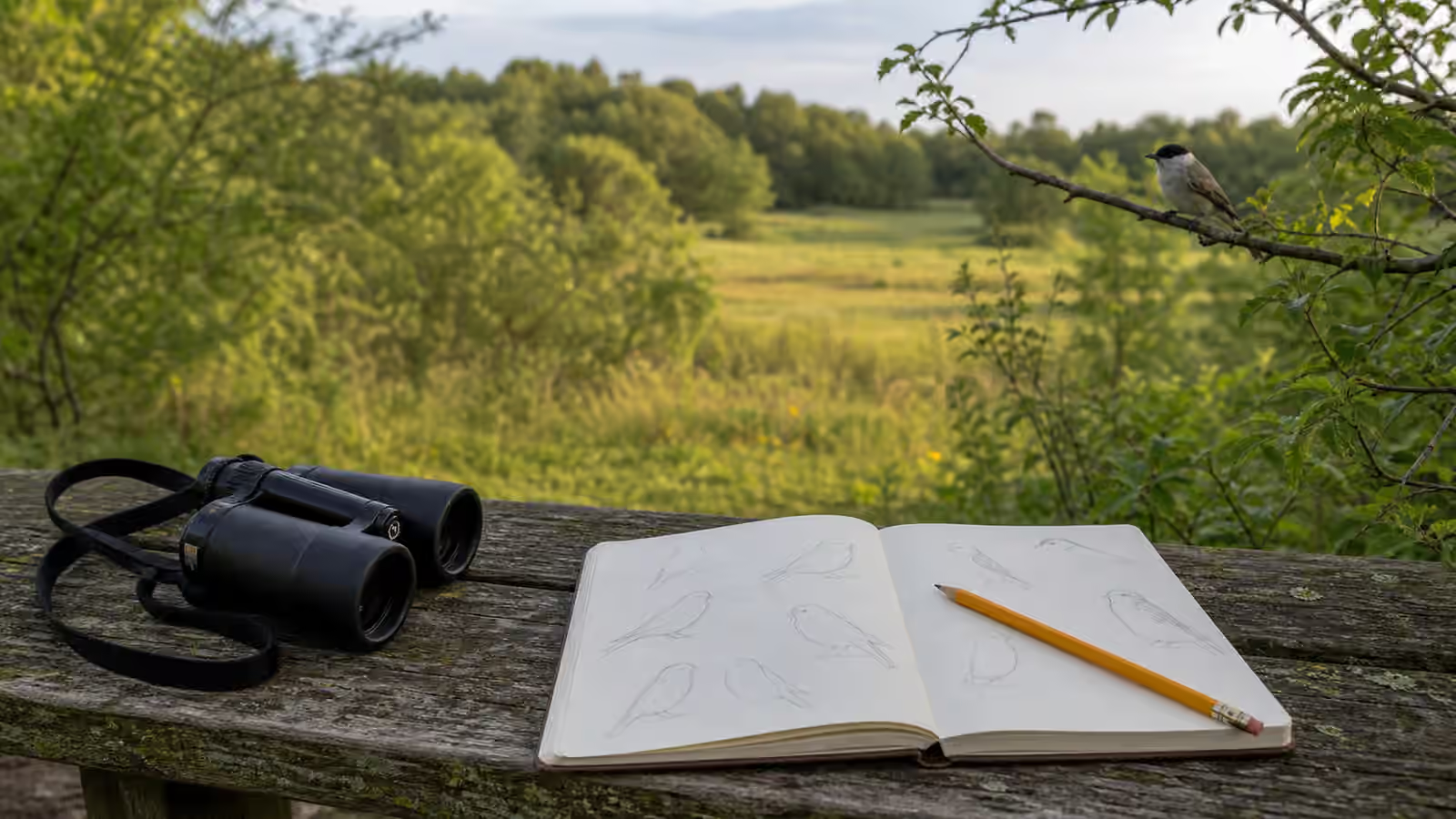
Field Sketching for Birders can help with rare birds because drawing slows the mind. A quick outline of bill shape, wing length, tail, posture, or a field mark may save what mattered before the bird moves. The sketch does not need to be attractive. It needs to keep your memory from becoming more confident than your view.
Be Careful With Sharing
Sharing a rare bird can be generous. It can also create problems. Before posting precise locations, consider the site, the bird, and local norms. Some places can handle visitors. Others cannot. Private property, nesting areas, fragile habitat, small neighborhoods, narrow roads, sensitive roosts, and birds already under pressure may call for restraint or for sharing through local moderators rather than public detail.
If you do share, include responsible viewing information. Where should people stand? Where should they not park? What distance has worked? Are paths closed? Are dogs allowed? Is a scope useful? Are there sensitive areas to avoid? Good location notes reduce wandering and pressure.
Crowds need manners. Keep voices low, leave room for passersby, avoid blocking trails, and make space for people who have not seen the bird yet. If the bird disappears, do not spread through habitat trying to flush it. Wait, scan from appropriate places, or let the sighting end. Rare-bird birding tests whether excitement can remain disciplined.
Let the Rarity Teach the Ordinary
After the sighting, return to ordinary birds. This is where the rare bird becomes more than a checkmark. What comparison did it teach? Did you learn a bill shape, a tail pattern, a feeding style, a call, a habitat preference, or a migration story? Did the local flock look different once you understood why one bird stood out? Did you notice a gap in your knowledge of common birds?
The healthiest rarity birding sends you back into regular birding with sharper attention. A vagrant shorebird can make you study expected shorebirds more carefully. An unusual warbler can make you listen better in local trees. A rare goose can make the common flock less anonymous. The rare bird should widen the field, not narrow it to alerts.
There is no need to pretend rare birds are not exciting. They are. The question is whether the excitement makes you more careful or less careful. Without hype, rarity birding becomes a practice of patience, comparison, good records, and respect for a bird that did not arrive to entertain anyone.