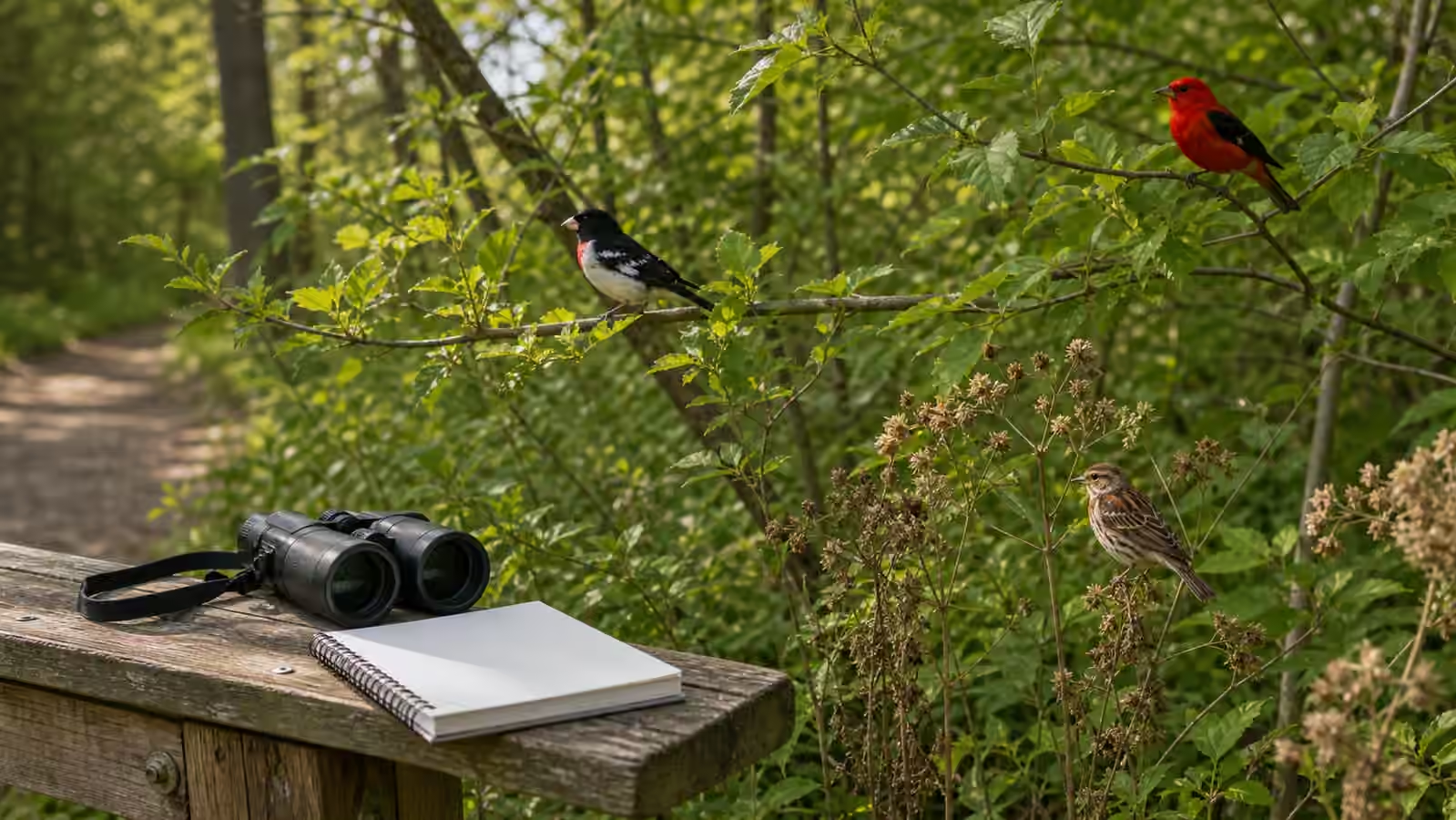
Colorful songbirds can make beginners both excited and careless. A flash of red, blue, yellow, orange, or rich brown appears in leaves, and the mind rushes toward the brightest plate in the field guide. Then the bird turns, the light changes, another bird sings nearby, and confidence collapses. Tanagers, grosbeaks, buntings, and their local equivalents are beautiful birds, but beauty is not a shortcut. The color gets your attention. The structure, behavior, voice, and habitat do the steadier work.
This guide is not about memorizing every regional species. The available birds differ greatly by location. It is about a method for looking at bright or thick-billed songbirds without letting color overwhelm the rest of the evidence. It connects with Woodland Birding , Finding Birds by Food Sources , and Birding by Ear because these birds often appear as leaf movement, seed feeding, or song before they become a clean view.
Let Color Open The Door, Then Step Past It
Color is real evidence, but it is unstable evidence. A red bird high in a green canopy may look black when backlit. A blue bird in shade may seem gray. A yellowish bird in fresh leaves may disappear into the tree. Females, immatures, worn birds, and molting birds may not look like the bright adult males beginners expect. Regional species may also vary enough that a single color word is not enough.
Instead of writing “red bird” and stopping, ask where the color was. Was the whole body red, or only the head, wing, breast, rump, or tail? Was the wing dark? Was the bill pale, heavy, pointed, or small? Did the bird stay high in the canopy, feed low in seed heads, sing from an exposed perch, or move with a mixed flock? A color note becomes useful when it is attached to structure and behavior.
Molt and Seasonal Plumage is helpful here because many songbirds look different across age and season. A bird that does not match the dramatic field guide image may still be exactly the bird you think, or it may be something else. Slow evidence keeps both possibilities open.
Bills Tell You How The Bird Feeds
Grosbeak-like birds earn attention from the bill. A thick, conical, seed-cracking bill changes the face and posture of a songbird. It may make the head look larger, the expression stronger, and the feeding style more deliberate. Bunting-like birds may also show seed-oriented bills, though their size, posture, and habitat can differ. Tanager-like birds may have a different balance of bill shape, canopy movement, and fruit or insect feeding.
Do not treat these as rigid categories. Local birds do not arrange themselves for beginners. The point is to notice the tool. A heavy bill suggests different feeding possibilities from a thin insect-catching bill. A bird opening seeds on a stalk gives a different clue from one gleaning insects from leaves or taking fruit in a shrub.
This is where Finches and Seed-Eating Birds overlaps usefully. Seed-eaters teach you to watch the bill as a working tool, not just a shape in a drawing. If a colorful bird is cracking seeds, hanging on dried stems, or visiting fruiting shrubs, the feeding method may narrow the possibilities before the color is fully clear.
Habitat Narrows The Question
Bright songbirds can appear in many places, but they are not scattered evenly. Some favor high woodland canopy during breeding season. Some use brushy edges, weedy fields, hedgerows, or shrubby powerline cuts. Some pass through parks and gardens during migration. Some sing from exposed perches over grass or scrub. Some become easier to see at fruiting trees or seed patches.
Before chasing the bird through the binoculars, describe the place. Was the bird in mature trees, low shrubs, open grass, a garden edge, a wet thicket, or a roadside fence line? Was it alone or moving with warblers, vireos, chickadees, finches, or sparrows? Mixed Flocks Birding is useful because a slower, thicker-billed bird may lag behind faster leaf-gleaners, giving you a second chance after the first rush passes.
Habitat also keeps expectations local. A bird that would be common in one region may be unusual in another. Rather than importing someone else’s excitement, learn your own seasonal pattern. Patch Birding makes this easier. Return to the same edge through spring, summer, migration, and winter. The bright birds will stop being isolated surprises and become part of a local calendar.
Song Can Hold A Hidden Bird In Place
Many colorful songbirds are heard before they are seen. A tanager-like bird may sing from high leaves. A grosbeak-like bird may give a rich song from a concealed perch. A bunting-like bird may sing from a shrub, wire, or grassland edge. The exact sounds vary, but the field habit is stable: place the singer before you search for color.
Listen for height, direction, repetition, and movement. Does the sound come from the same tree again and again? Does it shift along the edge? Is there a shorter call between songs? If the bird is hidden, keep your eyes on the place where the sound repeats. Many beginners lose birds by scanning too widely. The better move is to narrow the stage and wait for a leaf gap.
If you use recordings for study, use them as references after the walk or as passive records in the field. Do not play songs to draw birds closer. Birding by Ear gives the broader reason: the goal is learning the soundscape, not manipulating it. A hidden singer is still a successful observation if you know where it was, how it sounded, and what habitat it used.
The Best View May Be The Second View
Colorful birds often move just enough to frustrate a first look. A bird appears in a leaf gap, turns away, drops behind a branch, then reappears on a better perch. If you rush to name it from the first flash, you may stop observing too soon. Wait for the second view. It may show the bill, wing pattern, tail length, underparts, or behavior you missed.
This patience matters around food sources. A bird visiting berries may return to the same shrub after retreating. A seed-feeding bird may move through a patch in a loose circuit. A canopy bird may work one tree before crossing to the next. If you understand the feeding pattern, you can place your attention where the bird is likely to reappear without stepping closer.
Your notes should admit the sequence. “Bright red bird high in oak” is less useful than “red-bodied songbird high in oak canopy, dark wings, thick bill impression, singing from same branch cluster, seen twice in side light.” The second note preserves uncertainty and evidence together.
Common Does Not Mean Easy
Some bright songbirds are common in the right place and season, but common does not mean automatic. They can be high, brief, silent, molting, backlit, or mixed with similar birds. Treat them with the same calm process you would use for a difficult sparrow or gull. Start with size and shape. Add bill. Add behavior. Add habitat and voice. Let color help, but do not let it drive.
Over time, the excitement changes quality. The flash of color still matters, but it no longer scrambles the whole observation. You notice the heavy bill before the bird turns. You hear the song and know which tree to watch. You recognize that a bright bird in a fruiting edge is using the same food map described in other guidebooks. The bird remains beautiful, but it has become readable too.