
Terns can make beginner birding feel both graceful and unfair. One moment a bird is floating above the surf on pointed wings. The next it folds, drops, splashes, rises, and shakes water from its body before you have found it in the binoculars. On sandbars and mudflats, terns may stand among gulls, shorebirds, and other water birds, all facing different directions in glare. They look elegant in the field guide and restless in the field.
This guide fits between Gulls for Beginners , Shorebirds for Beginners , and Seawatching and Big-Water Birding . Terns share places with all of those birds, but they ask for a slightly different kind of attention. Their bodies are built around lightness, long wings, buoyant flight, and quick feeding decisions. If you watch how they use air and water, they become less mysterious.
Begin With the Air
Terns are often easier to recognize in flight than standing still. Many have long pointed wings, narrow bodies, and a buoyant, angled way of traveling over water. They may hover, pause, dip, glide, turn sharply, or make repeated passes over the same patch. Some feed by plunge-diving. Others pick food from the surface or make shallower dips. The exact behavior depends on species, food, water, and season, but the flight-first habit helps beginners enter the group.
Do not start by asking for the exact species. Start by asking whether the bird is built like a tern at all. Compared with many gulls, terns often look slimmer, sharper-winged, and more buoyant. Compared with swallows, they are usually larger and tied more directly to water, beaches, rivers, lakes, marshes, or coastal edges. Compared with shorebirds, they spend more time working the air above water rather than running and probing along mud.
Silhouette Birding helps here because glare is common around water. A tern against bright sky may be nearly colorless, but its wing shape, tail length, head angle, and feeding method can still be visible. A brief plunge may tell you more than a long view of a backlit perched bird.
Watch the Feeding Pattern
Feeding terns write their behavior across the surface of the water. A bird may patrol along a shoreline, hover over one spot, angle downward, pull up, then circle back. Another may move steadily with the wind, making occasional dips. A group may gather where small fish, insects, or other prey are concentrated by tide, current, river flow, wind, or a change in water depth. The feeding pattern is not decoration. It is the reason the birds are there.
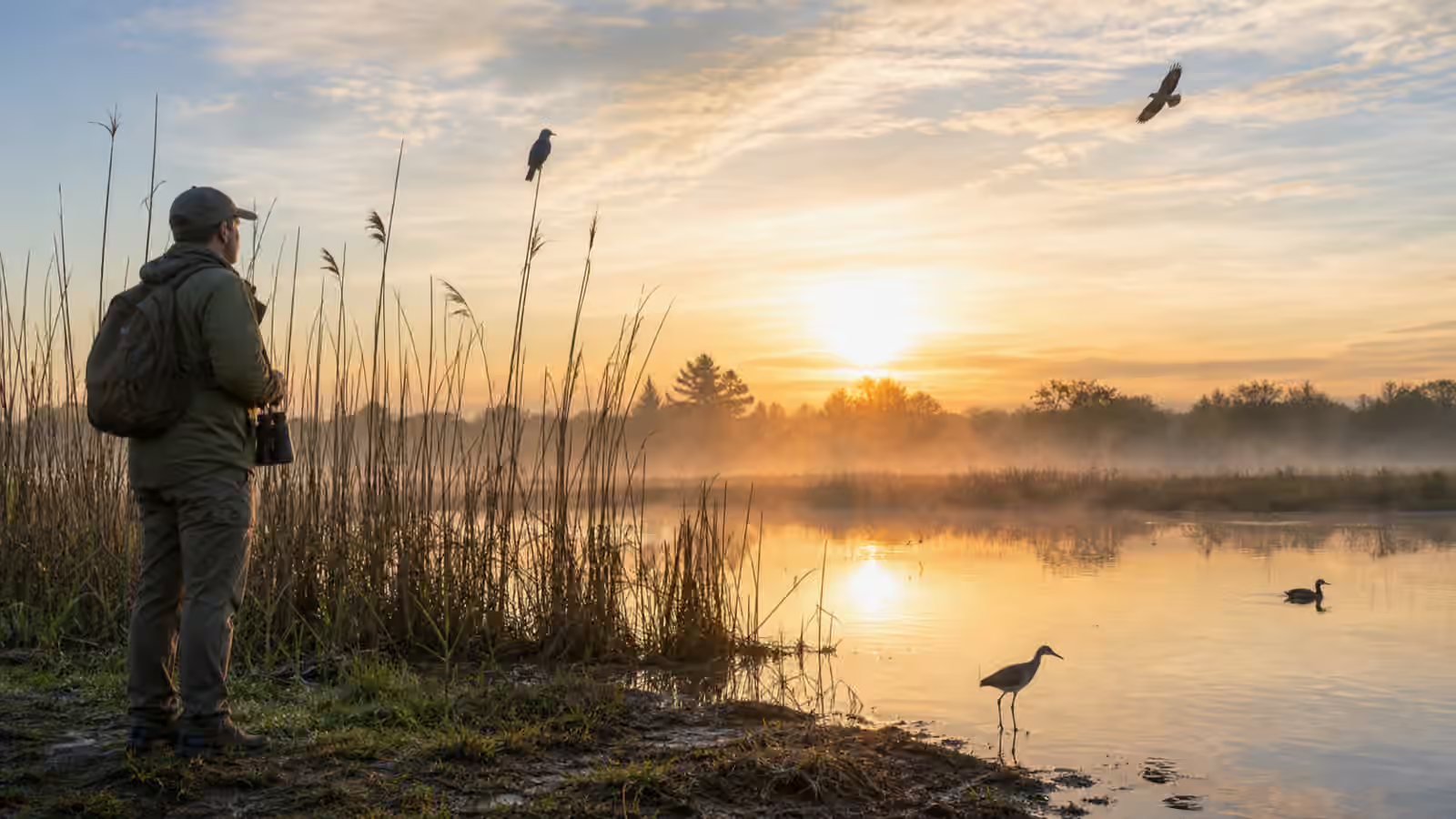
Water’s Edge Birding teaches beginners to read the edge before naming birds. With terns, read the moving edge too. Is the bird working the surf line, a tidal rip, a quiet lagoon, a river mouth, a marsh pool, a lake cove, a pier shadow, or a line where wind roughens smooth water? A tern feeding over one patch repeatedly may be showing you food below the surface.
If several terns are feeding together, compare their styles. One may hover longer. Another may fly lower. One may plunge from higher up. One may seem larger, heavier, or slower. These differences can become identification clues, but they also keep you watching real birds rather than chasing a single field mark. A bird that feeds calmly and repeatedly is giving you more information than a bird you pursue too closely.
Resting Flocks Need Patience
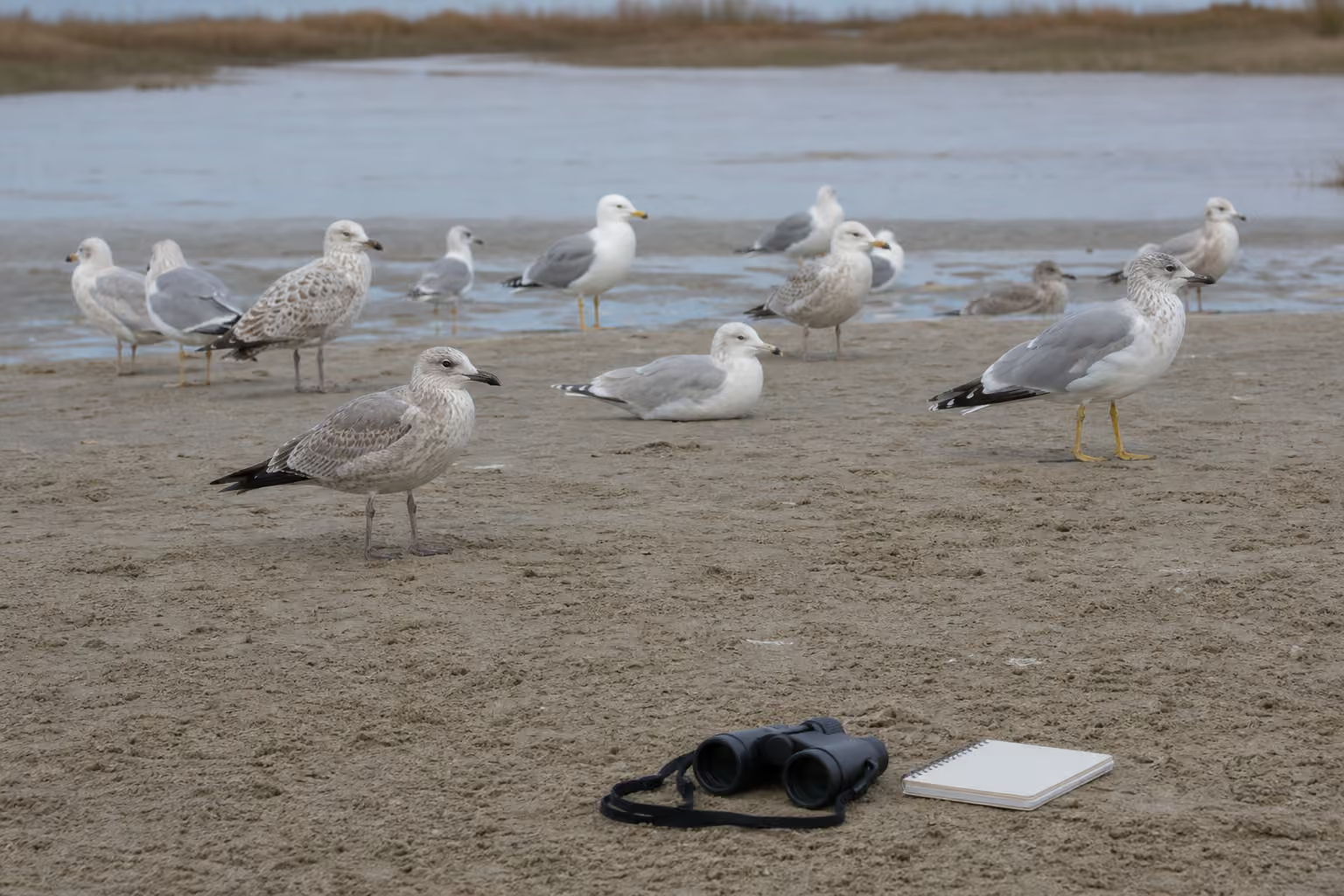
Terns at rest can be harder than terns in flight. On a sandbar, beach, mudflat, dock, gravel island, or exposed spit, they may stand shoulder to shoulder with gulls and shorebirds. Heat shimmer, distance, and bright sand can flatten everything. Some birds tuck their bills. Some face away. Some sleep. Others preen, stretch, call, shift, or suddenly lift in a loose flock.
Use comparison before certainty. Which birds look smaller or slimmer than nearby gulls? Which have long pointed wings extending past the tail? Which show a cap, a pale forehead, a dark bill, a colored bill, or different leg length? Those details vary by species, age, and season, so do not force them too quickly. Molt and Seasonal Plumage is useful because terns, like gulls and shorebirds, can look different across the year.
A scope helps with resting flocks, but the ethics are the same as always. Stay outside the birds’ comfort distance. If the flock tightens, stands taller, calls sharply, walks away, or flushes, you are affecting it. Spotting Scope Fieldcraft is valuable because it turns distance into information rather than a barrier. A distant flock that keeps resting is a better birding lesson than a close flock you forced into the air.
Separate Terns From Gulls Without Insulting Either
Many beginners learn terns by thinking “small gull with sharp wings.” That is a tolerable first step, but it becomes limiting. Terns are not lesser gulls. Their structure and behavior are different. Gulls often look heavier-bodied, broader-winged, more varied in posture, and more likely to walk, loaf, scavenge, or feed with many methods. Terns often look more aerial, with a tighter connection between wing shape and water feeding.
Gulls for Beginners teaches slow comparison within gull flocks. Use the same patience here. Watch the bill. A tern’s bill may look dagger-like, fine, straight, or strongly colored depending on species. Watch the tail. Some terns show a fork or long tail streamers, especially in certain plumages. Watch the wings when the bird stretches or takes off. Long, narrow wings can make the body look smaller than it really is.
Voice can also help. Many terns call in sharp, carrying notes over water and colonies. You do not need to memorize every call before going outside. Just notice whether the sound belongs to the flying birds, the resting flock, or a different species nearby. Birding by Ear works best when sound is tied to place and behavior.
Season and Site Matter
Terns are tied to season in ways beginners should respect. Some are migrants passing through. Some breed on beaches, islands, marshes, gravel bars, rooftops, or other open sites where local conditions allow. Some gather after breeding. Some appear inland over reservoirs, rivers, and lakes. The details depend on region, but the general principle is stable: habitat, food, weather, and season decide where terns become likely.
Migration Morning is not only about songbirds in trees. Movement happens over water too. A storm, wind shift, tide change, cold front, or calm break can change what birds are using a shoreline or lake. Weather Window Birding can help you treat wind and light as part of the field problem rather than as annoyances.
Breeding sites require restraint. Ground-nesting and colony-nesting birds may be vulnerable to disturbance, trampling, dogs, repeated photography, and people walking through areas that look empty from a distance. Follow posted access rules, keep dogs away where required, and do not approach chicks, nests, or roped areas. This is not about legal advice. It is ordinary field courtesy: if birds are raising young on open ground, your curiosity should not make their work harder.
Write the Flight Before the Name
Tern notes should move. Write what the bird did. “Slender pale bird with long pointed wings feeding over lagoon, hovered twice, plunged shallowly, then rested with ten similar birds on sandbar.” That note preserves flight style, habitat, feeding, flock context, and uncertainty. A stronger species name may come later, but the observation already has value.
If the view was too distant, say so. If the bill color was not visible, say so. If heat shimmer changed the size impression, say so. Birding Checklists and Local Records rewards this discipline because records are most useful when they carry evidence. A careful partial identification is better than a confident name built from a bright wish.
Terns are worth the effort because they turn water into motion. They show where food gathers, how wind changes flight, how resting flocks use open ground, and how much structure remains visible when color fails. Stand back, watch the air, let the birds keep feeding, and the sharp-winged shapes over the water will begin to sort themselves.