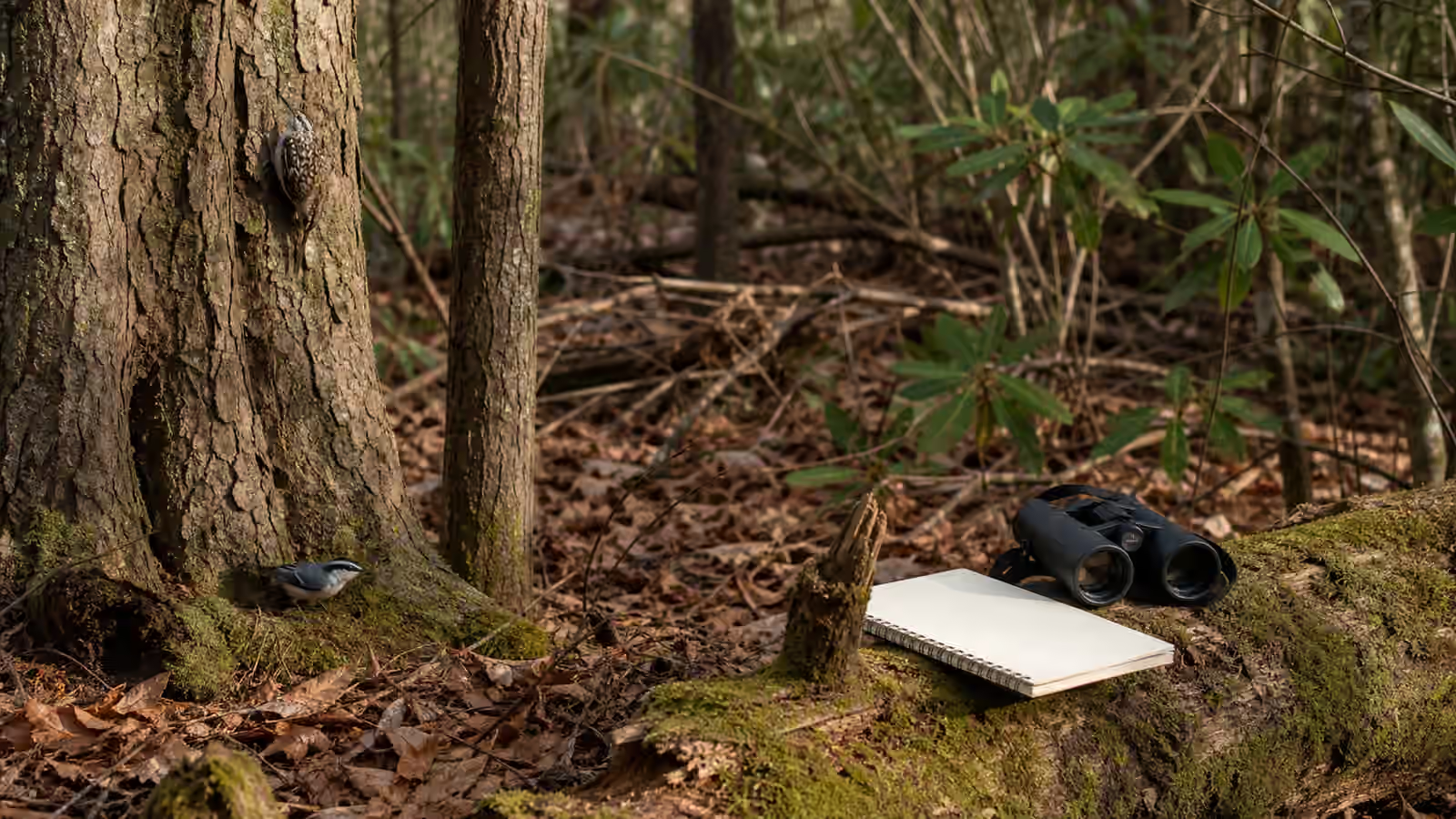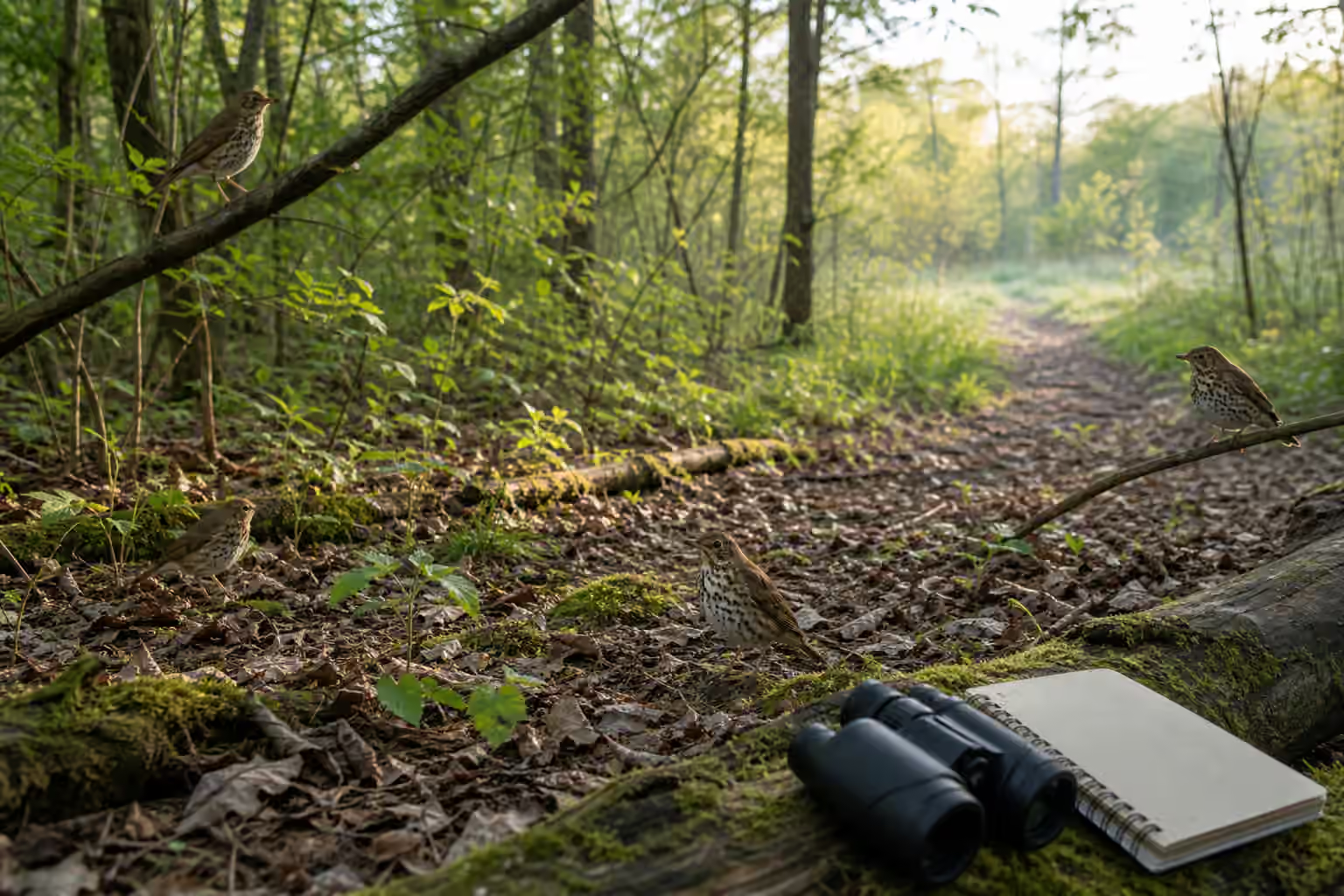
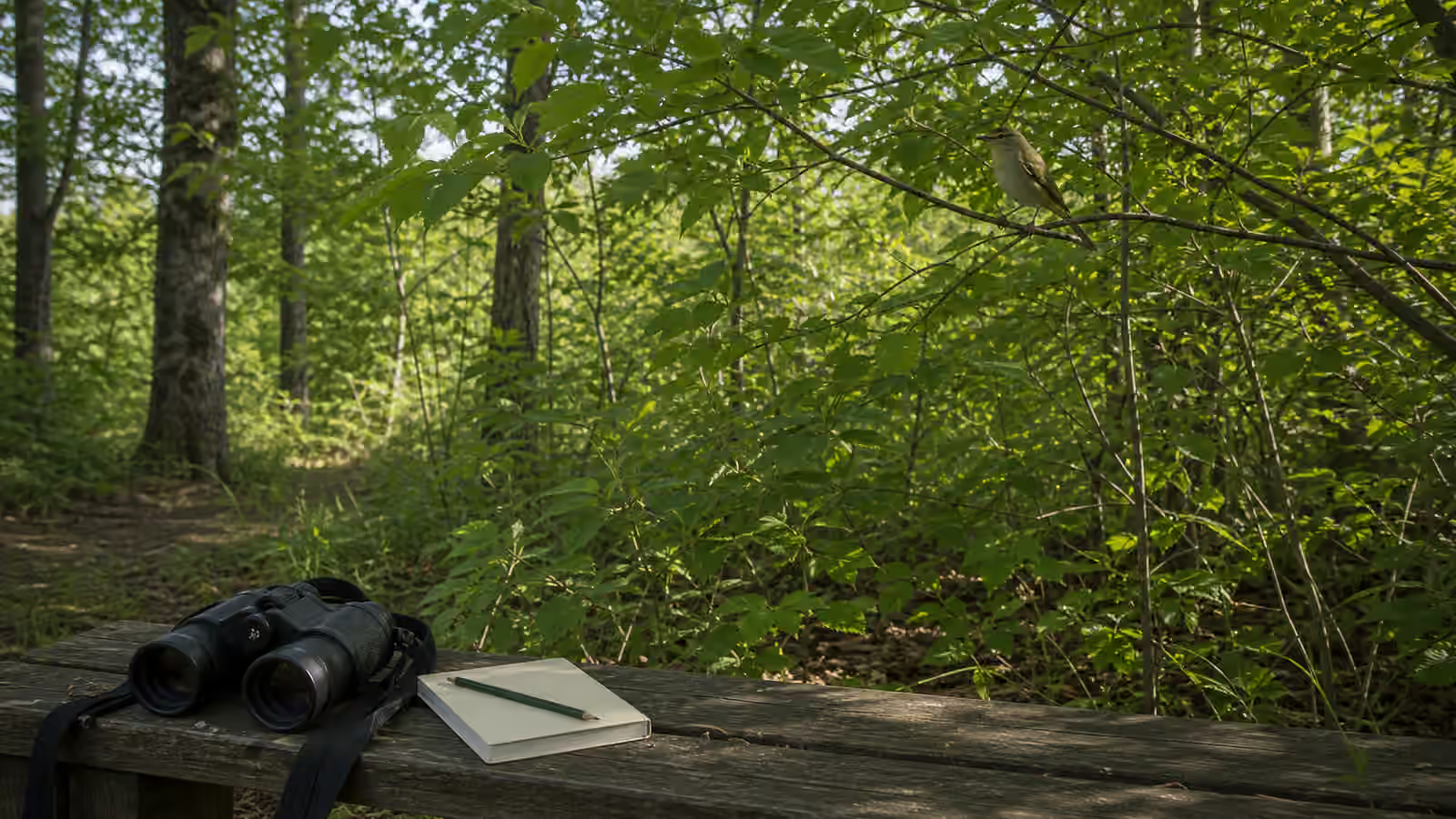
Vireos can be difficult for a beginner because they often refuse to behave like the birds people expect to notice first. Many are not brightly theatrical. They may sing again and again from leaves that hide them perfectly. They move more deliberately than warblers, pause just long enough to disappear, and then begin singing from a slightly different branch. A person can stand under the right tree for ten minutes and still feel as if the bird is made of sound rather than feathers.
That difficulty is also the lesson. Vireos and similar slower canopy songbirds teach patience in leafy places. They ask you to listen, hold a small area of foliage in view, and notice movement that is not frantic. Warblers for Beginners covers fast leaf movement and migration urgency. This guide covers the quieter problem of birds that are present, vocal, and still oddly hard to see.
Let the Song Fix the Bird in Space
The first skill is not identification. It is location. A singing vireo-like bird can seem to throw its voice across the canopy. Leaves reflect sound, and repeated phrases can make the bird feel everywhere at once. Stand still for a moment before moving. Listen for whether the song comes from high canopy, mid-level leaves, a forest edge, a streamside tree, or a single hidden crown. Then watch that area without scanning the whole woods.
The method overlaps with Birding by Ear . Listen for rhythm, spacing, and repetition. Some vireo songs have a measured, repeated quality, as if the bird is placing short phrases into the air and waiting between them. Others may sound more continuous or varied depending on local species. Do not worry if the song does not become a name immediately. A good first note might say, “Repeated short phrases from high leafy canopy, bird stayed hidden, possible vireo-like song.” That is better than pretending you saw field marks you never saw.
As you listen, watch for the branch that moves after a phrase. A bird may sing, pause, shift a few feet, and sing again. The sound gives you the neighborhood; the leaves give you the exact clue.
Movement Is Slower Than Warbler Movement
Beginners often lump every small leafy bird into one mental category. Movement helps separate them. Many warblers move quickly, flick through outer leaves, hover briefly, fan tails, or glean with restless energy. Vireos often look more deliberate. They may move along a branch, pause, inspect leaves, take a caterpillar, and sit still long enough to make you doubt where they went. Local species vary, and no single habit is perfect, but pace is a useful clue.
This is where Woodland Birding becomes practical. The canopy is layered. A bird high in sunlit leaves behaves differently from a bird in mid-story shade or low shrubs. If you know which layer is active, you can stop chasing every flicker. Vireos often reward the birder who watches one small window of leaves instead of sweeping the whole tree with binoculars.
Use binoculars after you have a likely spot. If you lift them too soon, you may lose the wider movement. First see the leaf twitch, the branch shift, or the small body crossing a gap. Then raise the binoculars and hold steady. The view may last only a second, but repeated seconds add up.
Structure Matters When Color Is Quiet
Many vireo-like birds are subtle. Some show spectacles, wing bars, pale lores, greenish or grayish tones, yellowish sides, or a plain face, but these marks are easy to distort in leaf shadow. Structure gives you steadier evidence. Look for a somewhat heavier bill than many warblers, a slower head movement, a compact body, and a way of searching leaves that feels less nervous. Again, this depends on your local birds, but it gives you a place to begin.
How to Identify Birds Without Guessing argues for size, shape, behavior, habitat, and sound before color. Vireos prove the point. A pale eyebrow seen through leaves can be a trick of light. A yellow wash can vanish when the bird turns. A bill shape, song pattern, and slow feeding rhythm may survive a bad angle better than color.
When you do get a view, avoid demanding every mark at once. Try to leave with two or three honest details. Was the bill relatively thick? Did the face look plain or spectacled? Were there wing bars? Was the bird greenish, gray, yellowish, or mostly colorless in that light? Did it sing while you watched it? These small details are useful because they are tied to a real observation.
Food Explains the Waiting
Vireos and many canopy songbirds spend a lot of time inspecting leaves because leaves hold food. Caterpillars, small insects, eggs, and other tiny prey can be hidden along leaf edges, undersides, and twigs. A bird that seems to be doing nothing may be reading the tree more carefully than you are.
Finding Birds by Food Sources helps here. A tree with fresh leaves, insect activity, flowers, or edge sun may be better than an equally pretty tree nearby. During migration or breeding season, one oak, willow, fruiting tree, or streamside patch can hold repeated activity. If a hidden singer keeps working the same crown, there may be food as well as territory.
Watch how the bird feeds. Does it glean slowly, hover briefly, reach under leaves, pause between moves, or take larger prey to a perch? Does it stay inside the foliage or work outer branches? Does it join other birds or remain alone? Feeding style makes a hidden bird less abstract.
Mixed Flocks Can Hide the Slower Bird
In migration and outside the breeding season, vireos and other canopy birds may appear with mixed flocks. Chickadees, warblers, kinglet-like birds, tanager-like birds, woodpeckers, nuthatches, and local equivalents can move through together. The fast birds catch the eye first. The slower bird may be behind them, working a nearby branch after the main rush has passed.
Mixed Flocks Birding recommends following the group without letting it become a blur. With vireos, it helps to watch the trailing edges of the flock. After the quick birds move through, hold the same tree a little longer. A deliberate songbird may still be there. It may not move with the same urgency, and that difference can be the clue.
Do not assume that every small bird in a flock is a warbler because the first bird was a warbler. Mixed movement is an invitation to compare. Which birds flick constantly? Which pause? Which climb trunks? Which search leaves slowly? Which vocalize? The flock is not a single event. It is several field lessons crossing the same tree.
Edges Make Views Easier
Deep canopy can be frustrating because leaves hide birds from below. Edges often give better angles. A woodland path, stream corridor, meadow border, orchard edge, park lane, or gap created by a fallen tree may let you see into the side of the canopy rather than staring straight up. Morning light can make one side of a tree active and visible while the other side stays dark.
This does not mean pushing off trail or trampling plants for a better view. It means choosing your position with care. Stand where leaves are side-lit, where a singing bird has a visible gap, or where the edge lets you watch the outer branches. If the bird moves deeper, let it go. There will be another phrase, another tree, another day.
Season matters too. Spring may give more song. Late summer can bring quieter birds and confusing young or worn plumages. Fall migration may produce brief views without much singing. Molt and Seasonal Plumage is useful because subtle birds become even subtler when feathers are worn or young birds are moving.
Write Notes That Respect What Was Hidden
A strong vireo note often admits how little was seen. “Heard repeated phrases from mid-canopy, glimpsed small greenish bird with heavier bill, slow movement, no clear wing bars.” “Small songbird feeding deliberately in oak leaves with warblers nearby, thick bill impression, silent after first view.” “Could not see bird, song repeated from same tree for five minutes.” These notes are not failures. They are the honest record of canopy birding.
Over time, repeated notes sharpen your sense of the group. You learn which songs are common at your local patch, which trees produce hidden singers, which edges give views, and which movements belong to warblers rather than vireos. Patch Birding is especially helpful because a familiar place lets you compare the same voices and layers through the season.
Vireos teach a patient kind of confidence. You may hear more than you see. You may leave some birds unnamed. But you will become better at holding a sound in space, waiting through leaves, and accepting subtle structure as evidence. In a woodland full of motion, the slower bird can be the one that teaches you to look with the most care.